February 3, 2025, 10th IER seminar of FY2024 was held <graduate students>
| Date & Time | Mon. Feb 3, 2025, 13:30-15:00 JST |
| Venue | 6F Conference room, Main Bldg. IER/Online (Zoom) |
| Speakers | SUGENO Haruto (First year master’s student, major in Environmental Radioactivity) MASHIKO Atsushi (First year master’s student, major in Environmental Radioactivity) YOSHIDA Asahi (First year master’s student, major in Environmental Radioactivity) (Presentation order) |
| Lecture Titles | A wide-Area assessment of 137Cs accumulation in mammals and birds using roadkill specimens (Sugeno) Estimation of 137Cs uptake pathway of Japanese eel by rearing experiment and river survey near the Fukushima Dai-ichi Nuclear Power Plant (Mashiko) Comparison of calculated values from atmospheric transport models and observed values using Rn-222 (Yoshida) |
| Participants | 15 |
Institute of Environmental Radioactivity (IER) regularly holds the IER seminar in which the faculty members report on their research results, with the aim of facilitating their research activities and promoting communication.
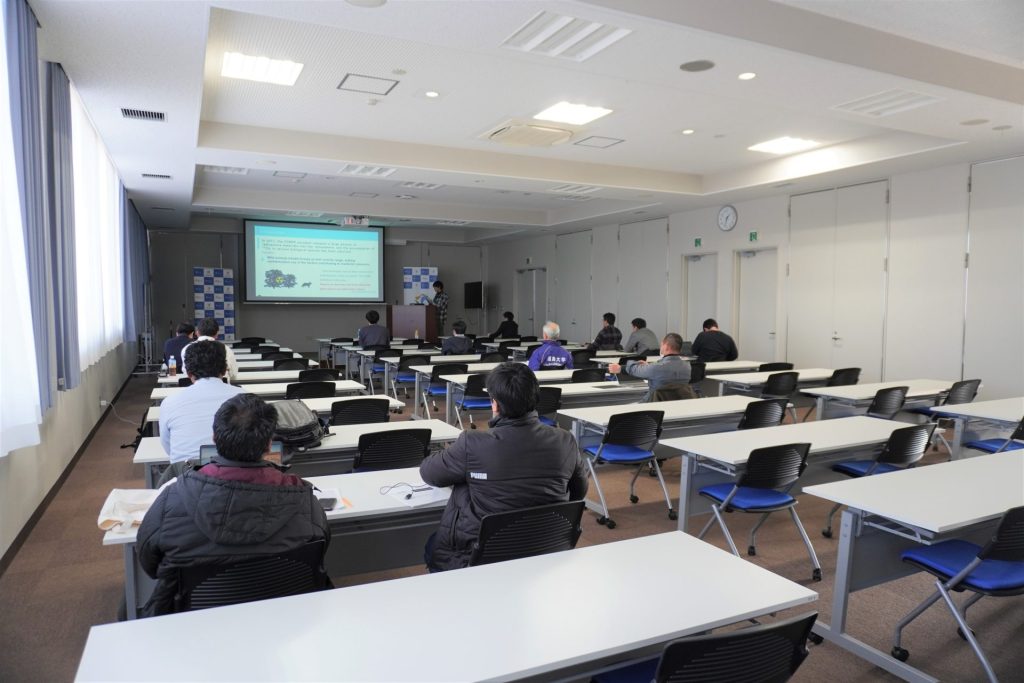
In the 10th IER seminar of this fiscal year that was held on Feb 3, 2025, three presentations were given by first year master’s students to 15 participating researchers and students as follows.
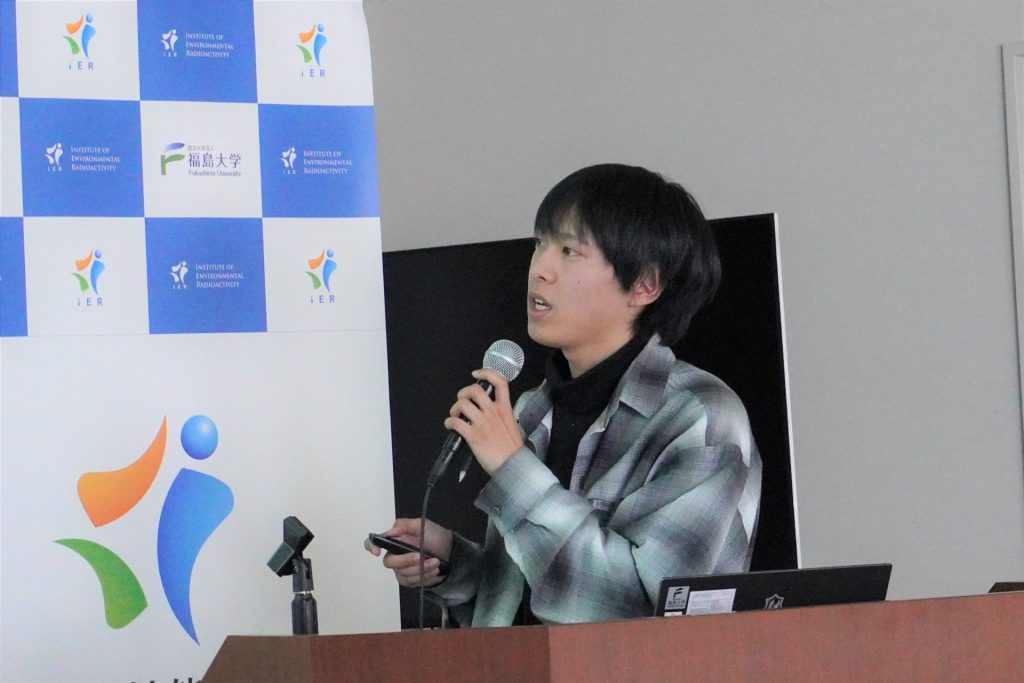
Mr. Sugeno in Ishiniwa Laboratory presented his research on evaluation of the accumulation of 137Cs in collected mammals and birds in accidents (mainly roadkill) in Fukushima Prefecture. The Fukushima Daiichi Nuclear Power Plant accident in March 2011 released large amounts of radioactive materials, leading to widespread deposition. In particular, 137Cs is a nuclide with a long half-life that feared to accumulate in living organisms. Previous studies have confirmed high concentrations of radioactive materials in a wide variety of organisms, but data on large and medium-sized mammals remains limited. In this study, 47 individuals of 14 species were collected from April 2024 to January 2025 and compared with the monitoring results from Fukushima Prefecture during the same period. As a result, particularly high 137Cs concentrations were confirmed in individuals of the weasel family, including badgers, weasels, and martens.
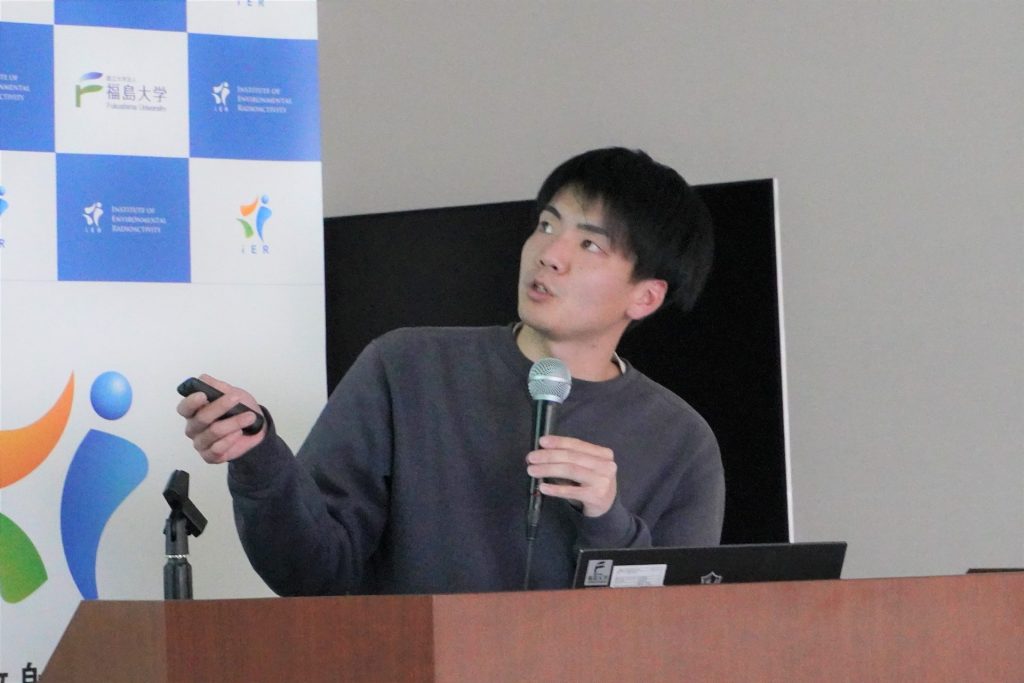
Mr. Mashiko in Wada Laboratory presented about the uptake pathway of 137Cs in Japanese eel, which inhabits both freshwater and seawater. Rearing experiments in freshwater and seawater (salinity 0.1:32 psu) and river surveys near the FDNPP were conducted. The extreme values of the concentration ratio (CR value) of 137Cs in fish to test water were estimated to be 9.79 L/kg in the seawater and 2.30 L/kg in the freshwater. The CRs for natural individuals (average 243 L/kg) were significantly higher than predicted in the study. These results suggest that the 137Cs uptake is affected by salinity and that preys are the main uptake pathway.
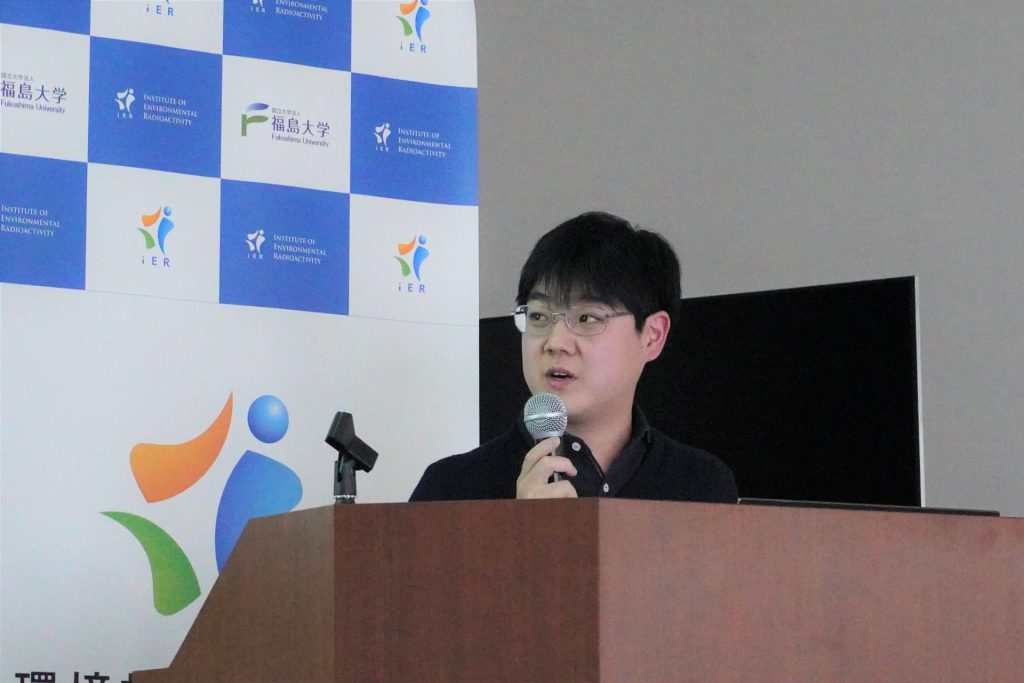
Mr. Yoshida in Hirao Laboratory presented the results of a comparison between calculated and observed values by an atmospheric transport model using Rn-222, a natural radioactive nuclide, as a tracer to evaluate the transport process from the earth’s surface. This research was designated to improve the accuracy of atmospheric transport models, which are effective in solving environmental problems such as advection and diffusion of air pollutants and radioactive materials.
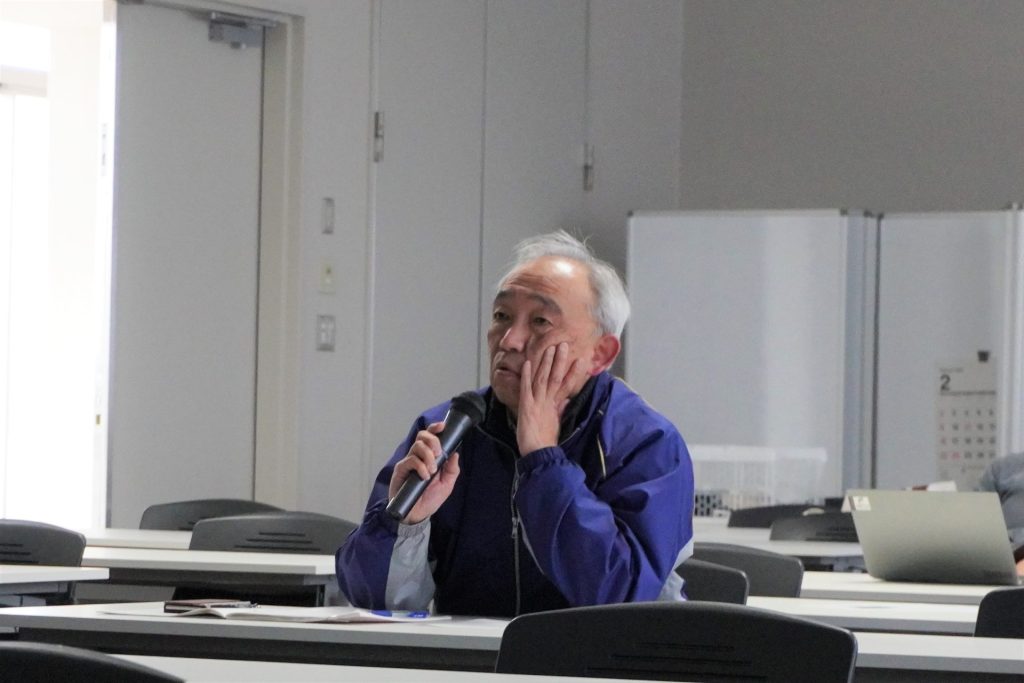
After each presentation, many questions and comments were raised by IER faculty members.