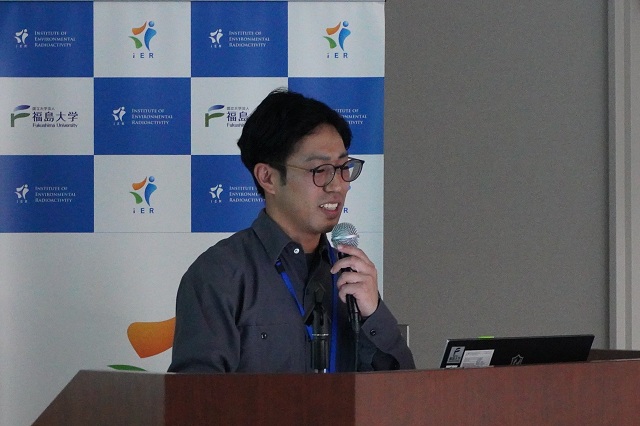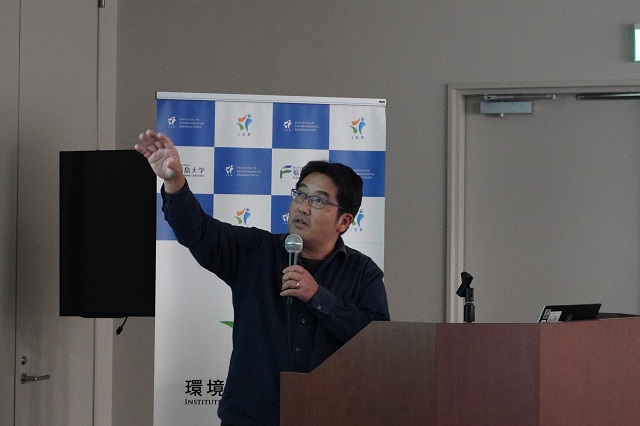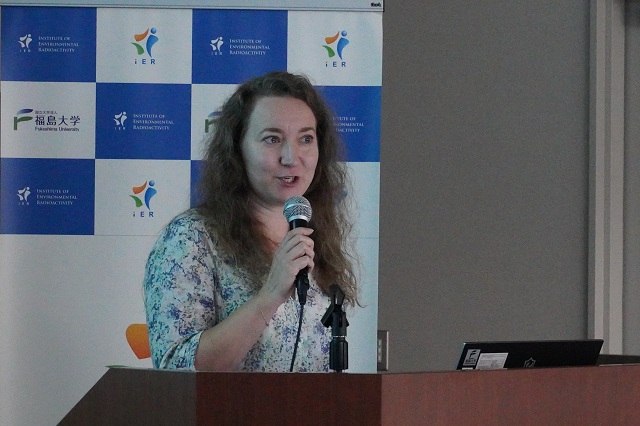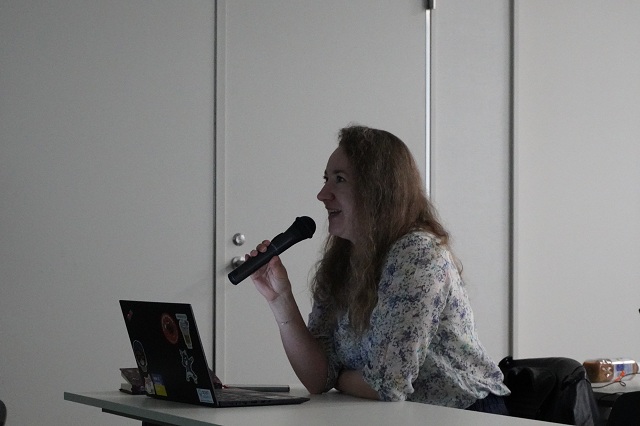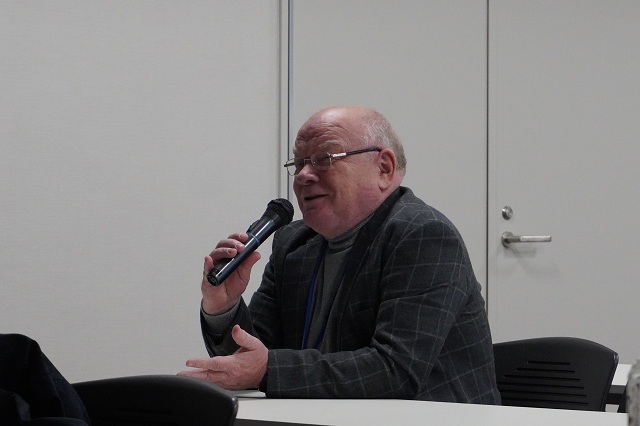
On October 27, 2025, 5th IER Seminar of FY2025 was held <Project Researcher Kakuma, Professor Wada, Dr. Tomkiv>
| Date & Time | Mon. October 27, 2025, 13:30-15:00 JST |
| Venue | 6F Conference room, Main Bldg. IER/Online (Zoom) |
| Speakers | KAKUMA Minato (Project Researcher) WADA Toshihiro (Professor) Dr. Yevgeniya TOMKIV (Researcher, Norwegian University of Life Sciences) (Presentation order) |
| Lecture Titles | Radiocesium transfer in forest–river ecosystems: insights from contaminated freshwater fish and web-building spiders (Kakuma) Elucidation of radiocesium contamination mechanism of fish using euryhaline fish as a model (Wada) Risk communication in nuclear emergencies: embracing the complexities (Tomkiv) |
| Participants | 33 |
Institute of Environmental Radioactivity (IER) regularly holds the IER Seminar in which the faculty members report on their research results, with the aim of facilitating their research activities and promoting communication.
In the 5th IER Seminar of this fiscal year, held on October 27, 2025, two presentations were given by IER researchers, Project Researcher KAKUMA Minato and Professor WADA Toshihiro. We also welcomed Dr. Yevgeniya TOMKIV, who was visiting Japan for the F-REI International Symposium, to give a presentation. A total of 33 participants, including researchers and students, attended both in person and online.
Project Researcher Kakuma presented findings on the transfer of radiocesium in forest–river ecosystems. Based on field studies in Fukushima, the research combined radiocesium measurements, stable isotope analyses, and DNA metabarcoding of freshwater fish and web-building spiders. The results revealed that terrestrial inputs from forests enhance radiocesium accumulation in fish, while riparian spiders reflect contamination levels in nearby river environments, emphasizing the importance of cross-ecosystem material flows in evaluating radioactive contamination.
Professor Wada presented findings on the uptake and excretion of radiocesium in fish under different salinity conditions (freshwater, brackish water, and seawater), based on rearing experiments using starry flounder, an euryhaline fish that can adapt to freshwater and seawater. The series of experiments revealed that the 137Cs uptake from food was faster in freshwater and brackish water than in seawater, while the 137Cs uptake from water was faster in seawater. It was also shown that the 137Cs excretion occurred more rapidly in seawater. Professor Wada explained that these physiological differences significantly influence the 137Cs behavior in freshwater and marine fish following the nuclear power plant accident.
Dr. Tomkiv pointed out that radiation risk is a complex issue that goes beyond biological effects to encompass economic, societal, and ethical concerns. Risk perception is influenced by psychological factors such as involuntariness and uncontrollability, as well as social factors such as trust in organizations and past experiences with crisis response. She emphasized that effective risk management requires participatory communication based on ongoing dialogue and mutual understanding with citizens, rather than one-way explanations from experts.
After each presentation, various questions and comments were raised by participants.