The 11th IER Seminar of FY2025 held on February 9, 2026 (Graduate Students)
| Date & Time | Monday, February 9, 2026, 13:30-15:00 JST |
| Venue | 6F Conference Room, IER Main Building / Online (Zoom) |
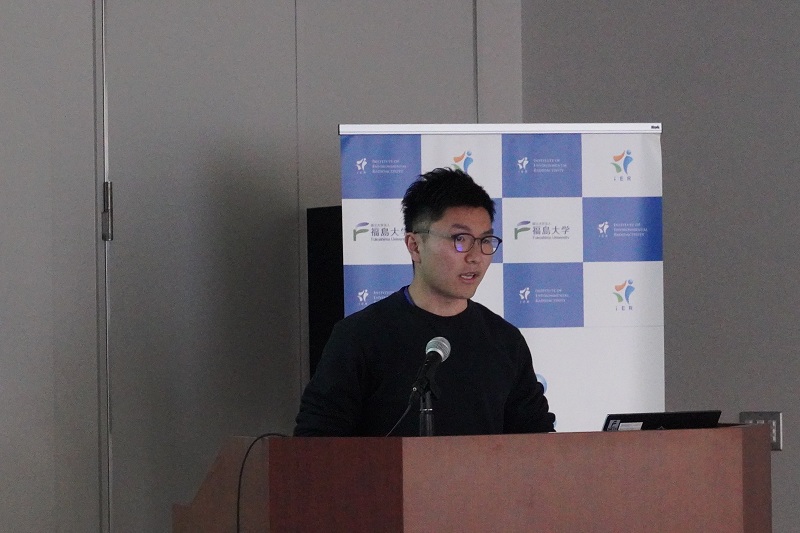
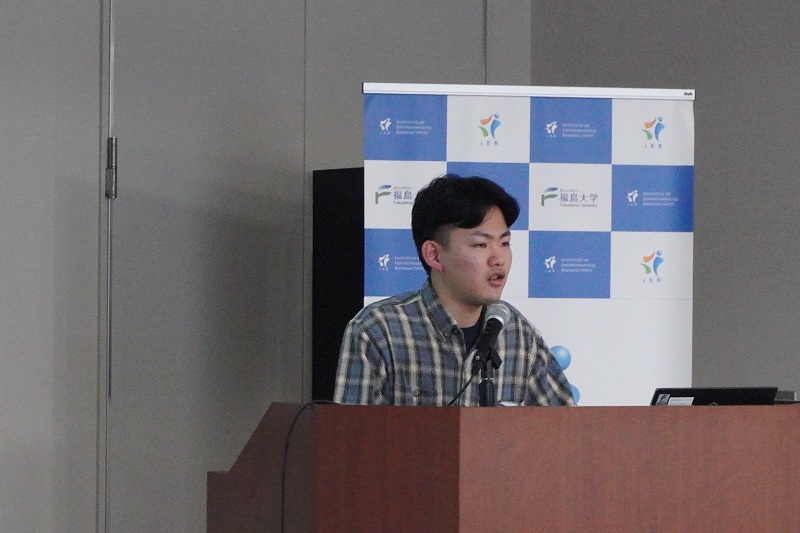
| Speakers | OKUYAMA Taiga (1st-year master’s student, major in Environmental Radioactivity) MIURA Shinya (1st-year master’s student, major in Environmental Radioactivity) MURASAWA Keigo (1st-year master’s student, major in Environmental Radioactivity) (Presentation order) |
| Lecture Titles | Distribution of radiocesium in seawater along the Pacific coast of northeastern Japan (Okuyama) Variations in 137Cs concentrations in pond smelt in a dam reservoir (Miura) Changes in Cesium-137 concentration in water in decontaminated ponds and elucidation of contributing factors (Murasawa) |
| Participants | 25 |
Institute of Environmental Radioactivity (IER) regularly holds the IER Seminar in which the faculty members report on their research results, with the aim of facilitating their research activities and promoting communication.
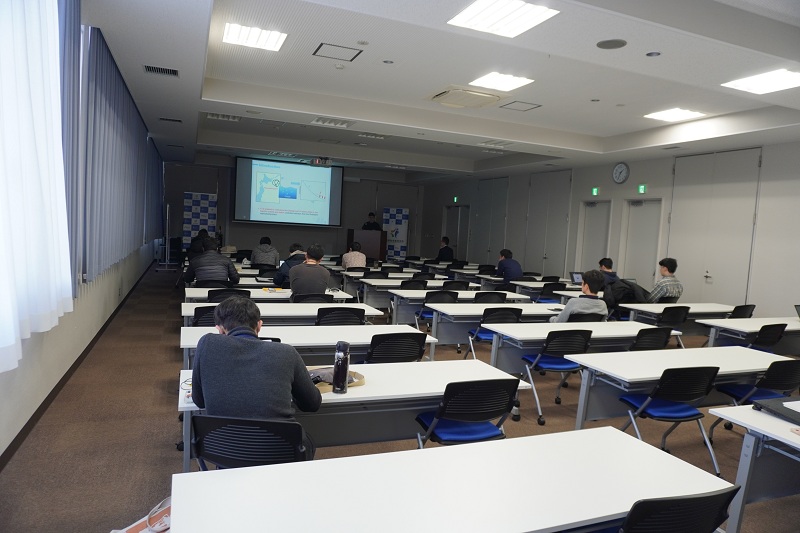
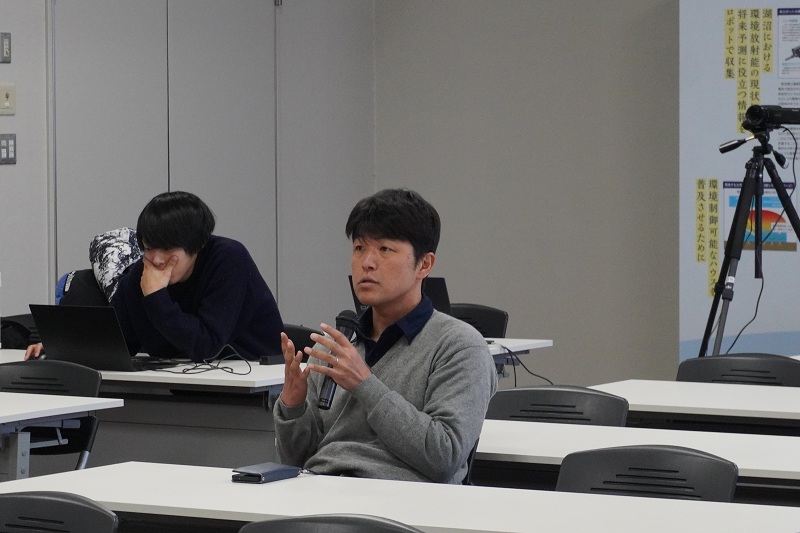
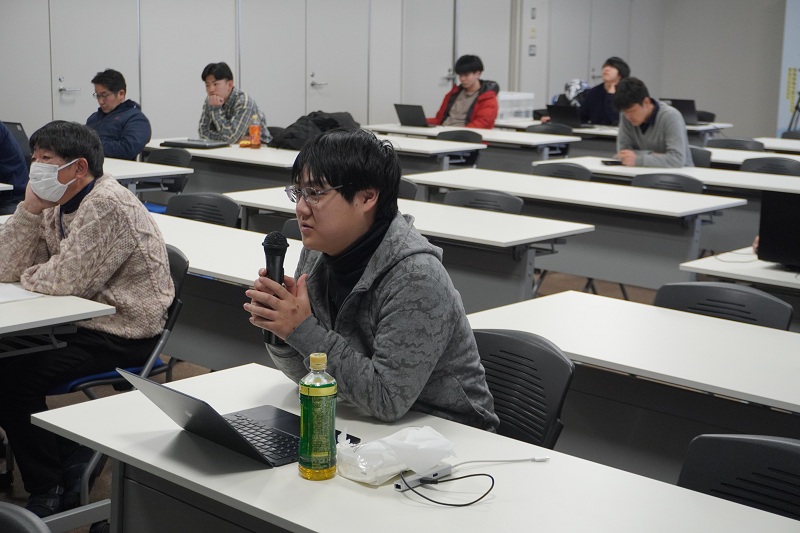
In the 11th IER Seminar of this fiscal year that was held on February 9, 2026, three presentations were given by three master’s students majoring in Environmental Radioactivity to 25 participating researchers and students as follows.
Mr. Okuyama from the Takata Laboratory gave a presentation on the current status and temporal variation of radioactive cesium concentrations along the Pacific coastal region, mainly focusing on the Tohoku area.
Mr. Miura from the Wada Laboratory presented research on variations in 137Cs concentrations in pond smelt. He compared the 137Cs concentrations in pond smelt, lake water, and zooplankton collected from the Yokokawa Dam reservoir between 2017 and 2025. The 137Cs concentrations in pond smelt and lake water showed a decreasing trend over time but also exhibited considerable fluctuations, suggesting the influence of water level changes and typhoons. He explained that the concentration ratio (CR) temporarily showed high values after typhoons. In addition, significant correlations were observed among these components, indicating that fluctuations in lake water 137Cs concentrations may affect pond smelt via zooplankton.
Mr. Murasawa from the Wakiyama Laboratory presented a study on changes in Cesium-137 concentrations in water in decontaminated ponds and elucidation of their contributing factors. To reduce radiation exposure risks around irrigation ponds and to resume farming operations, quantitative assessment of Cesium-137 is necessary. In decontaminated ponds, both the 137Cs concentration in suspended solids (CSS) and dissolved 137Cs concentration (Cdis) decreased significantly after decontamination compared to before. In the data selected this time, CSS and Cdis decreased by approximately 70% over the two years before and after decontamination. In one decontaminated pond in Okuma Town, the correlations between water temperature and Cdis, as well as between water temperature and the distribution coefficient (Kd) respectively strengthened after decontamination.
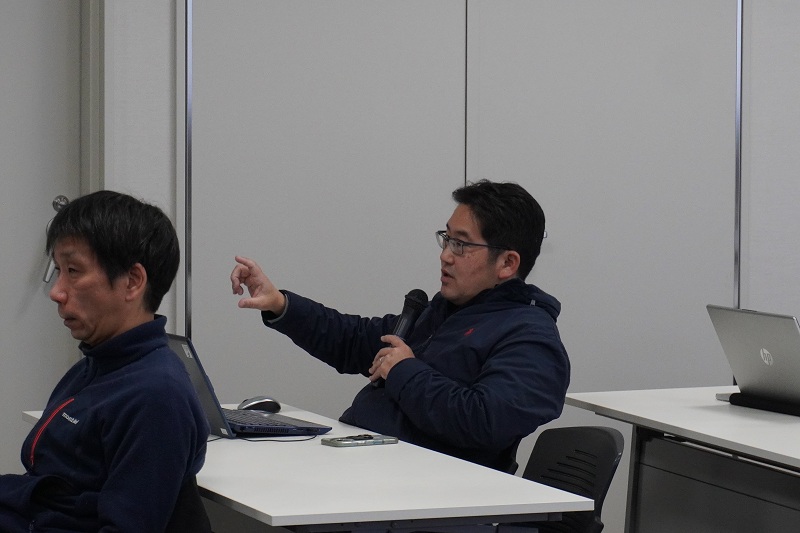
After each presentation, various questions and comments were raised by participants.