

- 所属
- フランス国立科学研究センター
- 外部リンク
プロフィール
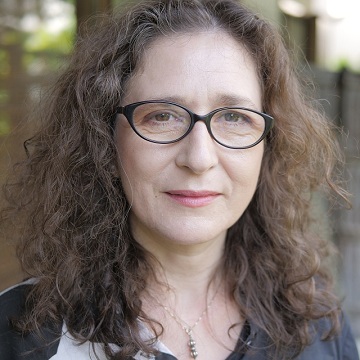
Cécile Asanuma-Brice is a CNRS researcher based in Japan, Director of Mitate Lab. Post-Fukushima Studies (IRL 2039, CNRS), a multidisciplinary and international CNRS laboratory on the consequences of the Fukushima nuclear accident and on NaTech crises, which she founded (co-signatory CEA and University of Fukushima, which host it).
In 2000, she joined the engineering school at Chiba University in Japan, where her research was funded by an initial JSPS/CNRS grant, then by the Japanese Ministry of Education and Research (MEXT).
With a double degree in urban planning (DESS) and a thesis in human geography from the School for Advanced Studies in Social Sciences directed by Augustin Berque (Japan Foundation Prize, Order of the Rising Sun and Cosmos International Prize), she is the author of numerous articles on the consequences of the Fukushima nuclear accident, which she has been visiting monthly since time T0, as well as on the transformations of the Japanese city and the underlying logics of urban production.
From 2008 to 2019, she worked as deputy director of the CNRS representative office in Tokyo. She contributes regularly to both the press (French and Japanese) and French radio and TV. A scientific advisor for several documentary films, including *Japan: Fukushima, Toxic Waters * (partly on her research work), ARTE Reportage 2025, directed by Sophie Bontemps; *Irradiated* , directed by Rithy Panh (winner of the Golden Bear at the 2020 Berlin International Comics Festival); and graphic novels, including *Return to Tomioka* (winner of an award at the 2025 Angoulême International Comics Festival), she also develops photographic work that encompasses both images directly related to the consequences of the nuclear disaster and more artistic productions (compositions). Her photographic works have been exhibited in Yokohama, Tokyo, Fukushima, and Paris (attracting 15,000 visitors to the Maison de la culture du Japon in March 2024).
研究テーマ
Urban planning, urban geography, urban sociology, environmental humanities (Japan)
分野
City, urbanization and Japanese society (transformation of Japanese cities and suburbs), production of urban space in industrialized societies, evolution of urban peripheries (suburbia) and consumer society, analysis of planning policies and their social effects
The role of housing as a tool for social and political regulation: Transformation of housing patterns and their social consequences
Fukushima nuclear accident / Risk society and disaster management: Disaster management; Social, political and territorial effects of the disaster; Analysis of territory in deep transition, Reconstruction of contaminated territories, Heritage reservation in reconstruction policy, Analysis of technological and environmental risks, Role of housing in crisis situations, Analysis of institutional and social responses, Transformation of social structures in the face of disruptions
キーワード
Fukushima nuclear power plant disaster, Reconstruction, Housing and urban policy, Japanese cities and public housing
研究概要
Books:
Cécile Asanuma-Brice. Fukushima, dix ans après. Sociologie d’un désastre. 2021. ⟨hal-03381551⟩
Cécile Asanuma-Brice. Un siècle de banlieue japonaise. Au paroxysme de la société de consommation. 2019. ⟨hal-02758856⟩
Cécile Asanuma-Brice. La transformation de la périphérie urbaine de Tokyo par les organismes de logements publics. 2012. ⟨tel-02877194⟩
Chapter in a book:
Cécile Asanuma-Brice, Thomas Hurtut. Territories in Crisis: Is Urban Resilience to Industrial Crises Possible? An Analysis of the Evolution of Land Use in Fukushima since 2011. Asian Studies. Asian Studies – Current Issues and Resolutions, 4, IntechOpen, 2025, Social Sciences, ⟨10.5772/intechopen.1011750⟩. ⟨hal-05548403⟩
Cécile Asanuma-Brice. La politique de reconstruction à Fukushima : lorsque reconstruire détruit. Cohabiter, Les Réclusiennes, 212 p., 2025, 978-2-919539-41-3. ⟨hal-05548402⟩
Cécile Asanuma-Brice. Le Japon, un rapport à la nature en déliquescence. Architecture et Ruralité, Archiscopie 30, 30, , 2022, ISBN/EAN9782916183442. ⟨hal-03872529⟩
Cécile Asanuma-Brice. Naoshima, la fusion en un espace hors du temps. Art et architecture, Archiscopie, 29, , 2022, ISBN 978291618343. ⟨hal-03872535⟩
Cécile Asanuma-Brice. From Atomic Fission to Splitting Areas of Expertise: When Politics Prevails Over Scientific Proof. Planetary Atmospheres and Urban Society After Fukushima, 2017. ⟨hal-02572990⟩
Cécile Asanuma-Brice. La mémoire de l’oubli, une forme de résistance à la résilience. Après le désastre. Réponses commémoratives et culturelles., 2016. ⟨hal-02572991⟩
Cécile Asanuma-Brice. Fukushima, c’était déjà demain. Franckushima, 2016. ⟨hal-02615057⟩
Cécile Asanuma-Brice. Nagaya – Shataku. Vocabulaire de la spatialité japonaise, 2013. ⟨hal-02615016⟩
Cécile Asanuma-Brice. Shataku 社宅: Le logement ouvrier au Japon. Philippe Bonnin; Inaga Shigemi; Nishida Masatsugu. Pour un vocabulaire de la spatialité japonaise, International Research Center for Japanese Studies (Nichibunken), pp.125-128, 2012. ⟨hal-02611163⟩
Cécile Asanuma-Brice. LOGEMENT SOCIAL NIPPON : UN BILAN APRÈS LA CATASTROPHE DU 11 MARS 2011. Le Japon: de nouveaux choix sociaux ? Les enjeux des politiques sociales, 2011. ⟨hal-02611134⟩
Academic Papers:
Cécile Asanuma-Brice. Namie (Fukushima), une commune rurale projetée en modèle mondial de résilience post-accident nucléaire. Géoconfluences, 2024. ⟨hal-04547686⟩
Cécile Asanuma-Brice, Thomas Hurtut. Territoires en crise : une résilience urbaine aux crises industrielles est-elle possible ? Analyse et bilan de l’évolution de l’occupation des sols à Fukushima (2011-2023). Territoire en mouvement. Revue de Géographie et d’Aménagement, 2024, https://journals.openedition.org/tem/11015. ⟨hal-04384028⟩
Cécile Asanuma-Brice, Olivier Evrard, Thomas Chalaux. Why did so few refugees return to the Fukushima fallout-impacted region after remediation? An interdisciplinary case study from Iitate village, Japan. International Journal of Disaster Risk Reduction, 2023, 85, pp.103498. ⟨10.1016/j.ijdrr.2022.103498⟩. ⟨hal-03924045⟩
Cécile Asanuma-Brice. Japon et nucléaire : Naissance et développement de l’industrie nucléaire au pays des séismes. Revue e-Phaïstos, A paraître. ⟨hal-04364154⟩
Cécile Asanuma-Brice, Jérôme Arnaud. Mapping of solar panels and Fukushima Daiichi Nuclear Power Plant Accident-associated radioactive waste storage in 2022 and 2023, Fukushima, Japan. Zenodo, 2023, ⟨10.5281/zenodo.7796792⟩. ⟨hal-04363855⟩
Cécile Asanuma-Brice. Fukushima : une reconstruction périlleuse. Raison présente, 2022. ⟨hal-03528178⟩
Cécile Asanuma-Brice. Fukushima : une reconstruction périlleuse. Raison présente, 2021, N°220, pp.71 – 80. ⟨10.3917/rpre.220.0071⟩. ⟨hal-03538319⟩
Cécile Asanuma-Brice. La lutte contre l’isolement dans la métropole japonaise. Archiscopie 27, 2021, 27, pp.37-41. ⟨hal-03544903⟩
Cécile Asanuma-Brice, Tristan Guillot. Administration du coronavirus au Japon : réussites et déboires. Territoire en mouvement. Revue de Géographie et d’Aménagement, 2020, ⟨10.4000/tem.6477⟩. ⟨hal-02611091⟩
Olivier Evrard, Roxanne Durand, Atsushi Nakao, J. Patrick Laceby, Irène Lefèvre, et al.. Impact of the 2019 typhoons on sediment source contributions and radiocesium concentrations in rivers draining the Fukushima radioactive plume, Japan. Comptes Rendus. Géoscience, 2020, 352 (3), pp.199-211. ⟨10.5802/crgeos.42⟩. ⟨cea-03079420⟩
Cécile Asanuma-Brice. フランス ヨーロッパにおける気候非常事態への緊急対応. Biocity, 2020, 82, pp.16-23. ⟨hal-02615141⟩
Cécile Asanuma-Brice. Huit ans après Fukushima, où en est le Japon avec l’énergie nucléaire ?. Géoconfluences, 2019. ⟨hal-02572996⟩
Cécile Asanuma-Brice. Huit ans après Fukushima, où en est le Japon avec l’énergie nucléaire ?. Géoconfluences, 2019. ⟨hal-02615086⟩
Cécile Asanuma-Brice. Fukushima, l’impossible retour dans les villages de l’ancienne zone d’évacuation : l’exemple d’Iitate. Géoconfluences, 2018. ⟨hal-02572989⟩
Cécile Asanuma-Brice. Fukushima, l’impossible retour dans les villages de l’ancienne zone d’évacuation : l’exemple d’Iitate. Géoconfluences, 2018. ⟨hal-02615070⟩
Cécile Asanuma-Brice. (Un regard engagé) Les migrants du nucléaire. Géoconfluences, 2017. ⟨hal-02572995⟩
Cécile Asanuma-Brice. 原子力カタストロフの際に原子力国家が移住避難に対し行う管理について. Kanagawa University Review, 2015. ⟨hal-02615018⟩
Cécile Asanuma-Brice. De la vulnérabilité à la résilience, réflexions sur la protection en cas de désastre extrême – Le cas de la gestion des conséquences de l’explosion d’une centrale nucléaire à Fukushima. Raison-publique.fr : arts, politique, société, 2015. ⟨hal-02572992⟩
Cécile Asanuma-Brice. Beyond reality-or-An illusory ideal: pro-nuclear Japan’s management of migratory flows in a nuclear catastrophe. The Asia Pacific Journal, 2014. ⟨hal-02573001⟩
Cécile Asanuma-Brice. De la gestion des flux migratoires par un Etat nucléariste dans un contexte de catastrophe nucléaire. Diplomatie : affaires stratégiques et relations internationales. Les Grands dossiers, 2014. ⟨hal-02615017⟩
Cécile Asanuma-Brice. FUKUSHIMA, UNE DÉMOCRATIE EN SOUFFRANCE. Outre-terre. Revue européenne de géopolitique, 2012, Haïti, Sichuan, Fukushima États d’urgence, 35-36, pp.457-470. ⟨10.3917/oute.035.0457⟩. ⟨hal-02611177⟩
Cécile Asanuma-Brice. Les politiques publiques de logement face à la catastrophe du 11 mars. Ebisu – Études Japonaises , 2012. ⟨hal-02615015⟩
Cécile Asanuma-Brice. Public Housing Policy in Response to March 11th. Ebisu – Études Japonaises , 2012, 47, pp.205-214. ⟨10.4000/ebisu.445⟩. ⟨hal-02572993⟩
Cécile Asanuma-Brice. Logement social nippon: Quand la notion de public retrouve sa raison. Urbanisme, 2011. ⟨hal-02611157⟩
Cécile Asanuma-Brice. Logement public nippon, à l’heure de la reconsidération. Habitat et société, 2010, pp.64-68. ⟨hal-02611149⟩
Cécile Asanuma-Brice. 日本の公共住宅団地への疑問. Nihon no sumai, 2001. ⟨hal-02611144⟩
Cécile Asanuma-Brice. Tôkyô, densification verte contre logement social ?. Urbanisme, 2001. ⟨hal-02572986⟩
好きなもの・趣味
自然、音楽、写真、陶芸
学歴
- 1994
- パリ第10ナンテール大学、一般課程修了(民俗学史)
- 1994
- パリ第10ナンテール大学、学士号(国土整備及び地域開発)
- 1995
- パリ第10ナンテール大学、修士号(国土整備及び地域開発)
- 1996
- パリ第10ナンテール大学、高等専門研究免許状(DESS)(国土整備及び地域開発)
- 1997
- パリ第10ナンテール大学、高等研究免状(DEA- Diplôme d’études appliquées)(都市と社会)
- 2001~2005
- 千葉大学 大学院自然科学研究科 多様性科学専攻(工学部)博士課程(2005年退学)
- 2012
- フランス社会科学高等研究院、博士
職歴
- 1999.9~2000.9
- パリ第10ナンテール大学、非常勤講師
- 2000.6
- パリ第10ナンテール大学大学院修士課程、非常勤講師
- 2000.10
- セルジー=ポントワーズ大学大学院博士課程、非常勤講師
- 2001.4~2004.3
- 放送大学教養学部、非常勤講師
- 2004.4~2007.3
- NPO「有形デザイン機構」設立、建築ワークショップ開催、丸山欣也建築事務所<モバイル> 研究アドバイザー
- 2007.9〜2019.11
- フランス国立科学研究センター・北アジア地域事務所、副所長
- 2020.1~2024.12
- Mitate Lab. 国際研究プロジェクト、代表
- 2025.1~現在
- Mitate Lab. 国際研究拠点、所長