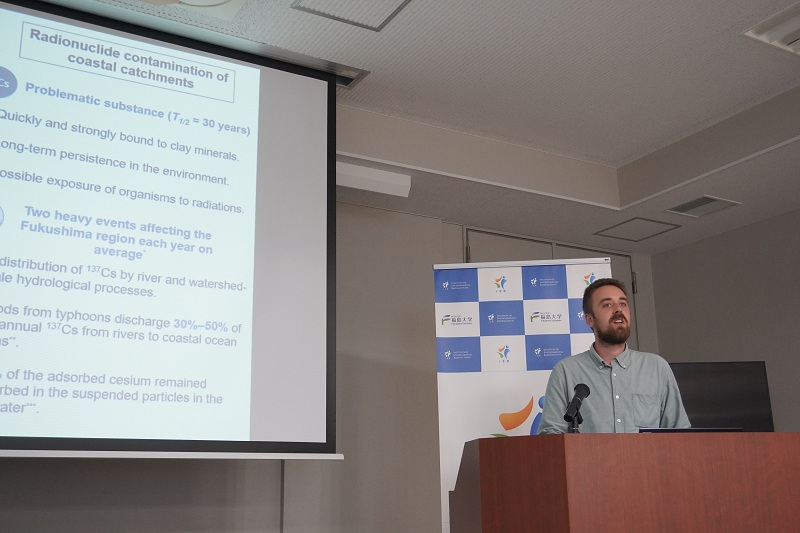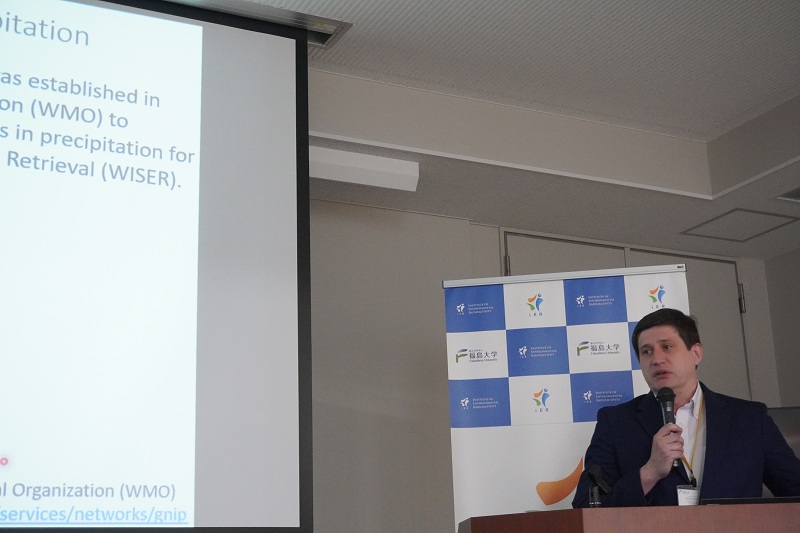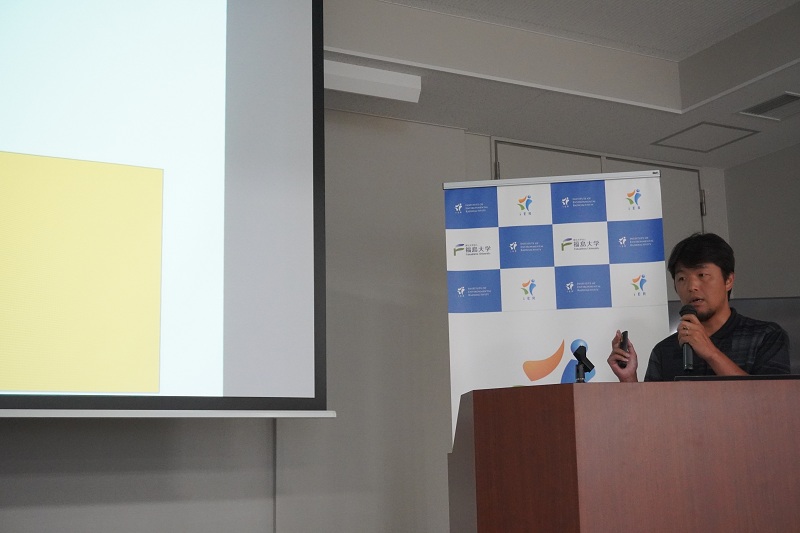
July 29, 2024, 2nd IER seminar of FY2024 was held <International Visiting Scholar CHABOCHE, Project Associate Professor GUSYEV, Associate Professor TAKATA>
| Date & Time | Mon. July 29, 2024, 13:30-15:00 JST |
| Venue | 6F Conference room, Main Bldg. IER/Online (Zoom) |
| Speakers | International Visiting Scholar Pierre-Alexis CHABOCHE Project Associate Professor Maksym GUSYEV Associate Professor TAKATA Hyoe (Presentation order) |
| Lecture Titles | Quantifying the riverine sources of sediment and associated radiocaesium deposited in lakes and off the coast of Fukushima Prefecture (Chaboche) Numerical modeling of tritium in water cycle (Gusyev) Tritium in coastal water before and after the release of ALPS treated water (Takata) |
| Participants | 27 |
Institute of Environmental Radioactivity (IER) regularly holds the IER seminar in which the faculty members report on their research results, with the aim of facilitating their research activities and promoting communication.
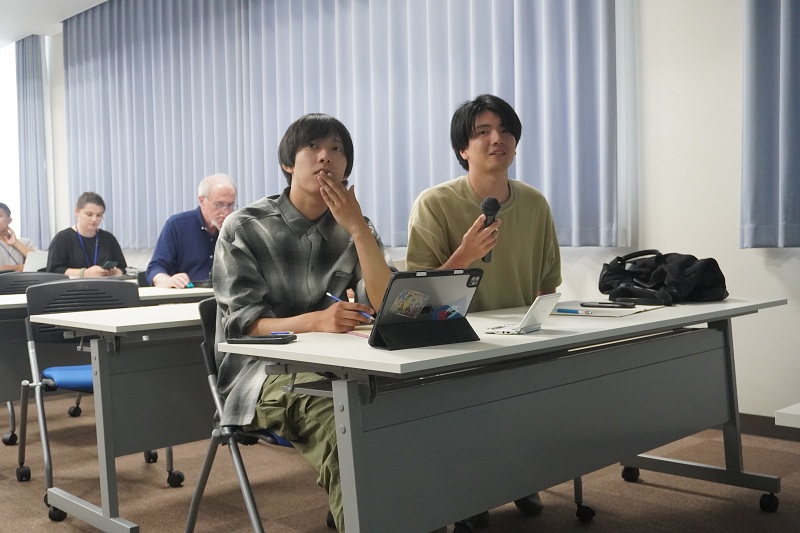
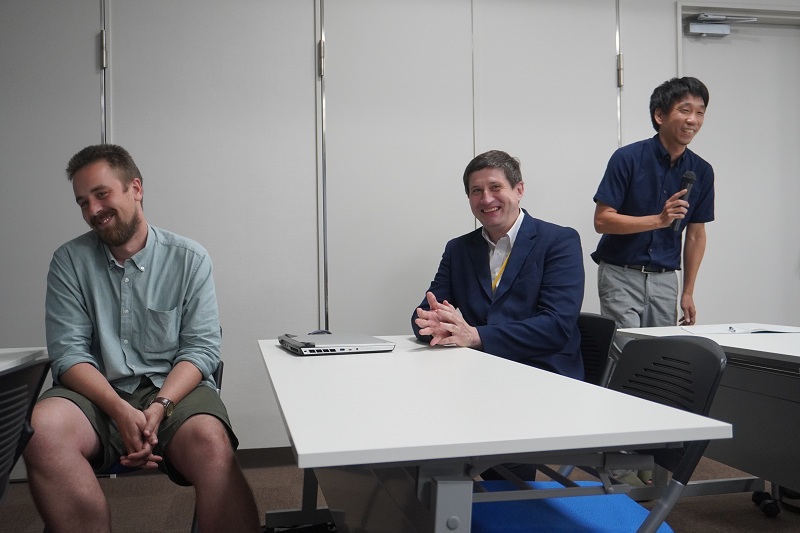
In the 2nd IER seminar of this fiscal year that was held on July 29, 2024, three presentations were given by International Visiting Scholar Pierre-Alexis CHABOCHE, Project Associate Professor Maksym GUSYEV, and Associate Professor TAKATA Hyoe to 27 participating researchers and students as follows.
International Visiting Scholar Chaboche presented the physico-chemical analyses of lake sediment cores collected from three reservoir dams and at the river mouths of three contaminated rivers. Based on the results, he reconstructed the impact of land-use changes on sediment contributions in three contrasted catchments since the Fukushima accident in 2011, while also proposing perspectives for transferring sediment tracing methods used in continental environments to marine settings.
Project Associate Professor Gusyev presented results of his study that utilizes atmospheric, terrestrial, and ocean tritium (H-3) modeling due to the Fukushima Daiichi Nuclear Power Plant (FDNPP) accident in 2011 and the Advanced Liquid Processing System (ALPS) treated water discharge from 2023. In March 2011, the FDNPP accident contributed anthropogenic H-3 to the natural H-3, which is generated in the upper atmosphere by cosmic rays and enters water cycle as tritiated water (HTO), increasing H-3 concentrations in coastal springs and wells and complicating HTO-tracer interpretation in Fukushima during the 2012-2014 period. For the ALPS treated water simulations, the ocean modeling of anthropogenic HTO releases allows us to quantify HTO concentrations due to the ALPS from present to future climates demonstrating insignificant contribution across the Pacific Ocean. As a result, environmental H-3 radioisotope with a half-life of 12.32 years remains a useful water cycle tracer at natural levels in Fukushima and other prefectures in Japan.
Associate Professor Takata delivered a presentation on change in tritium concentration after the release of ALPS treated water.
After the presentation, many questions and comments were raised by IER faculty members and students.