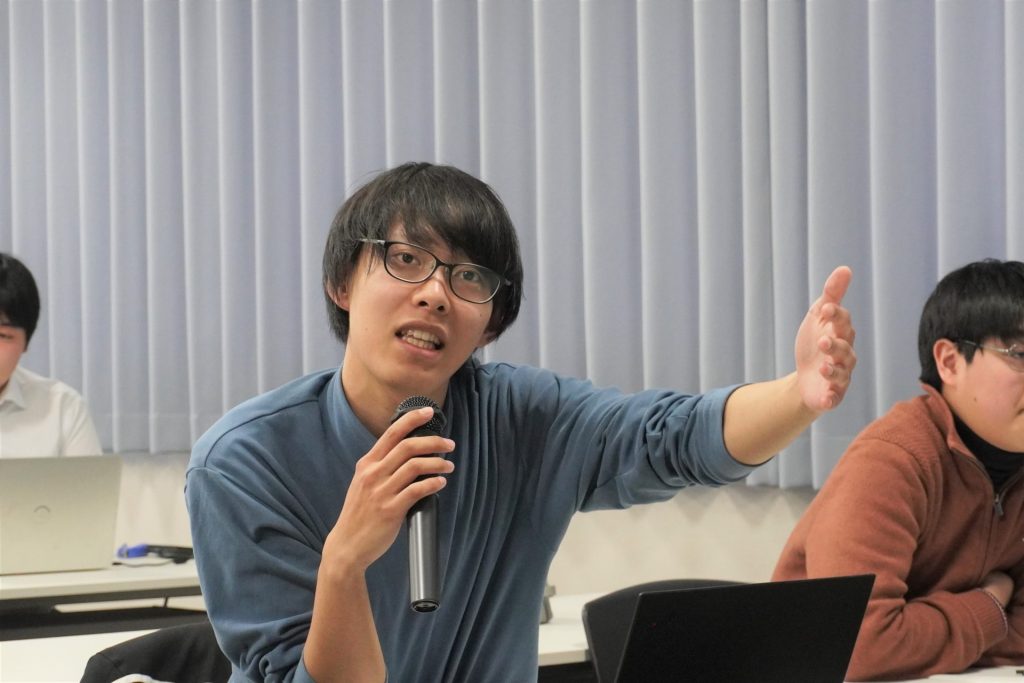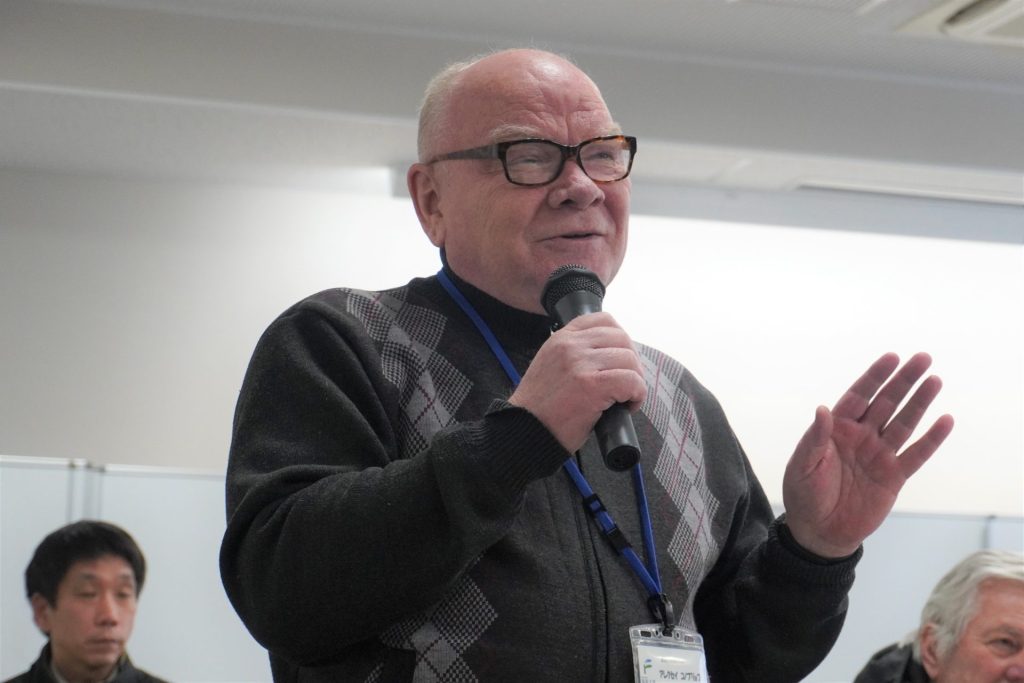
February 17, 2025, 11th IER seminar of FY2024 was held <graduate student, Project Professor Torii, Professor Yoschenko>
| Date & Time | Mon. Feb 17, 2025, 13:30-15:00 JST |
| Venue | 6F Conference room, Main Bldg. IER/Online (Zoom) |
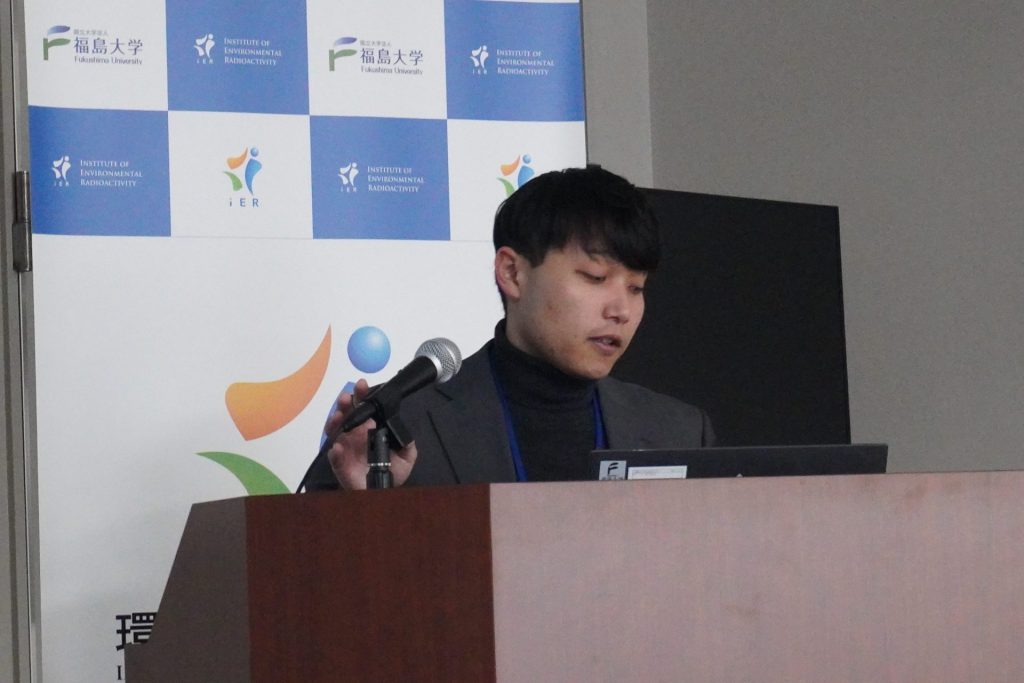
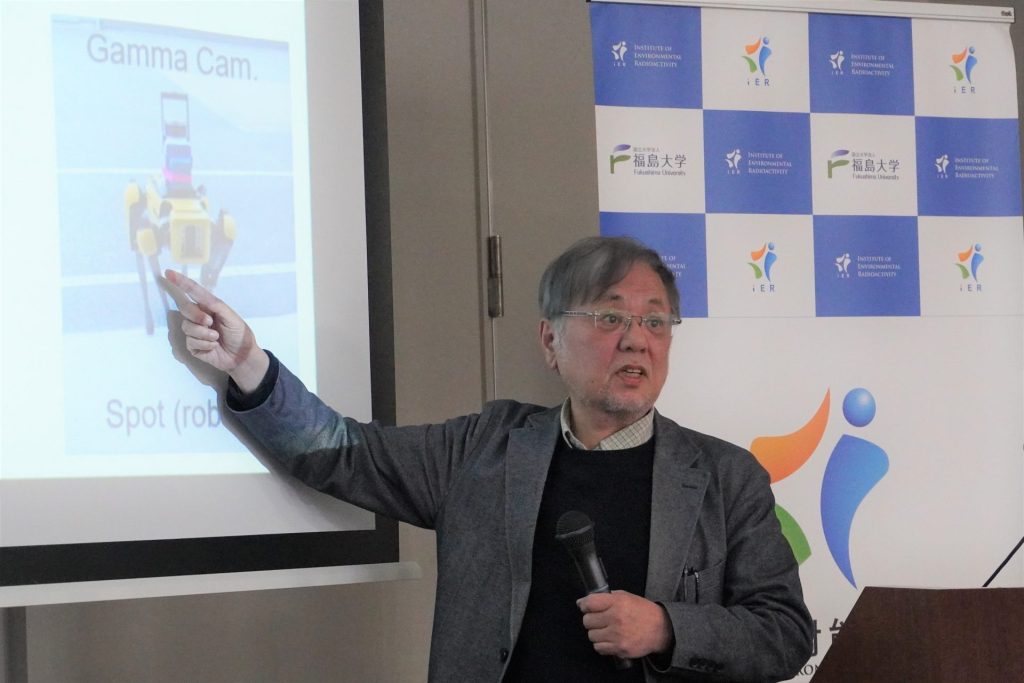
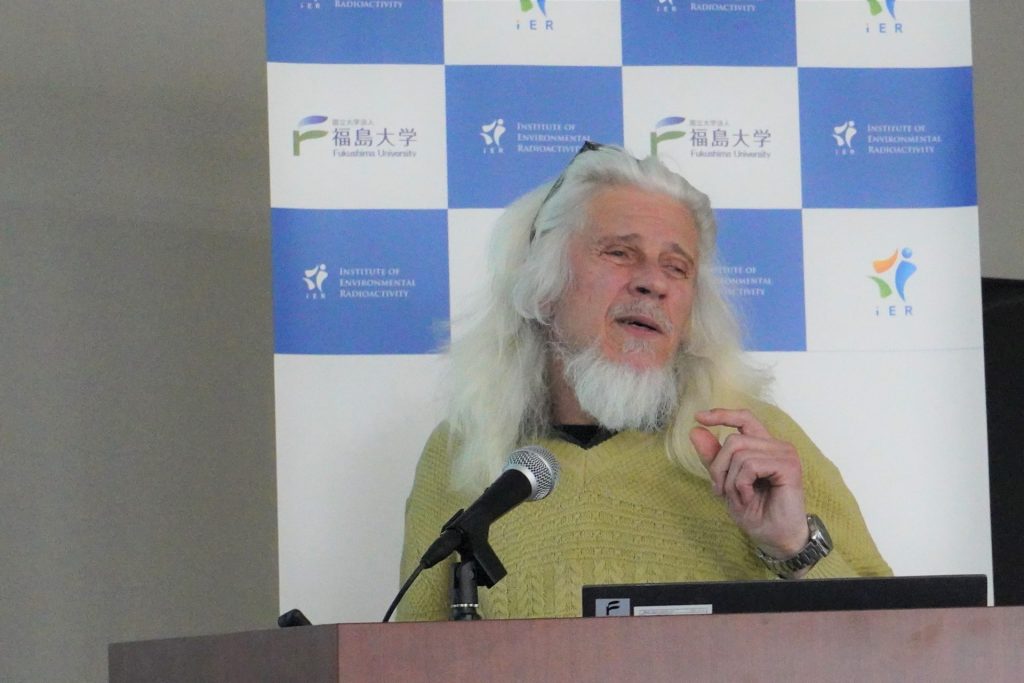
| Speakers | HOSHI Shota (First year master’s student, major in Environmental Radioactivity) Project professor TORII Tatsuo Professor Vasyl YOSCHENKO (Presentation order) |
| Lecture Titles | Seasonal changes in the diet and 137Cs concentration of masu salmon in the Ukedo River system (Hoshi) Radiological imaging technique from multi-viewpoints by using swarm robotics (Torii) Progress in the IER forest studies (Yoschenko) |
| Participants | 16 |
Institute of Environmental Radioactivity (IER) regularly holds the IER seminar in which the faculty members report on their research results, with the aim of facilitating their research activities and promoting communication.
In the 11th IER seminar of this fiscal year that was held on Feb 17, 2025, three presentations were given by a first year master’s student and two professors to 16 participating researchers and students as follows.
Mr. Hoshi in Wada Laboratory delivered a presentation about the impact of the 2011 Fukushima Dai-ichi Nuclear Power Plant accident on masu salmon in the Ukedo River. The study examined seasonal variations in their diets and 137Cs concentrations from June 2023 to June 2024. In Kodeya river, masu salmon preyed on ants in summer and fly larvae in autumn, while in Ogaki-shita, they mainly consumed ants in both seasons. 137Cs levels increased 4–6 times in autumn, especially in one-year-old fish. These findings suggest that seasonal dietary shifts significantly influence 137Cs accumulation in masu salmon.
Project Professor Torii is conducting research on imaging the spatial distribution of radiation sources using swarm intelligence technology. His study focuses on a method in which multiple simple robots move around to estimate radiation source distribution. In the seminar, he presented a system where multiple “Roomba”-like robots equipped with radiation detectors move around in a building, exchanging information with each other to create a radiation source distribution map. Through simulations and experiments, he demonstrated the current research findings and future prospects.
Professor Yoschenko delivered a presentation on the recent progress in the forest studies performed in Chornobyl and Fukushima. The joint Chornobyl studies established typical distributions of 90Sr and 137Cs in forest ecosystems 30 years after the deposition. Unlike 137Cs, which is mainly localized in the upper soil layer, 90Sr migrated to a depth of up to 1 m, and its accumulation in aboveground biomass can be up to 50% of the total content in the ecosystem. The 90Sr aggregated transfer factors in this study were significantly higher than the values recommended by the IAEA. Professor Yoschenko also presented the first results of the ongoing study of 137Cs and K distributions in trunk wood of Japanese cedar.
After the presentation, many questions and comments were raised by the attendees.