IAEA Lecture (IER Special Seminar) held on July 13, 2026
| Date & Time | Monday, July 13, 2026, 13:00-14:30 JST |
| Venue | 6F Conference Room, IER Main Building / Online (Zoom) |
| Lecture Program: 1. “Fukushima Prefecture and IAEA Cooperation on Revitalization after TEPCO Dai-Ichi Nuclear Power Station Accident” Mr. Miroslav PINAK (Head of the Radiation Safety and Monitoring Section, IAEA) 2. “IAEA Standards for Environmental Monitoring, Remediation Measures in the Fukushima Prefecture and their Effectiveness in comparison with global experience” Mr. Gerhard PROEHL (Expert, IAEA) 3. “Radioactive waste management” Mr. Gerard BRUNO (Head of the Radioactive Waste & Spent Fuel Management Unit, IAEA) 4. “Food and Drinking Water Potential Health Risk” Mr. Matthias LADEMANN (Expert, IAEA) 5. Q&A and Questionnaire | |
| Language | English (consecutive interpretation for Q&A only) |
| Participants | 33 |
| Moderator | Prof. NANBA Kenji (Director of IER) |
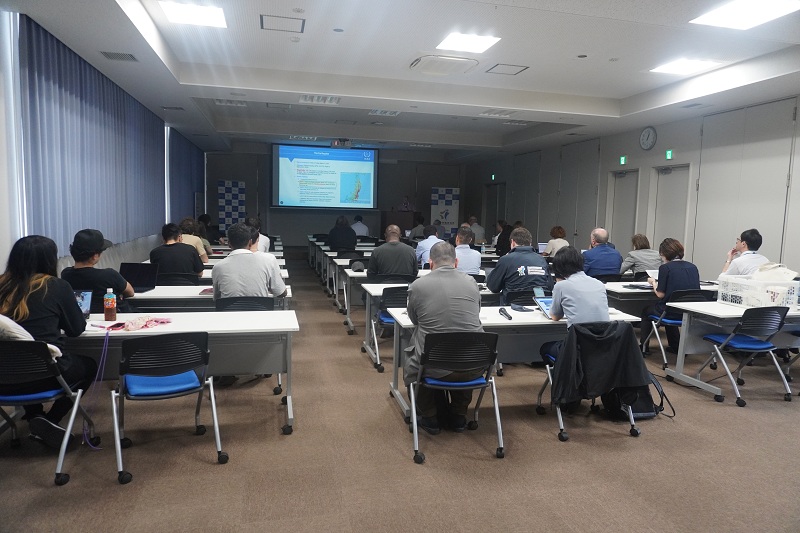
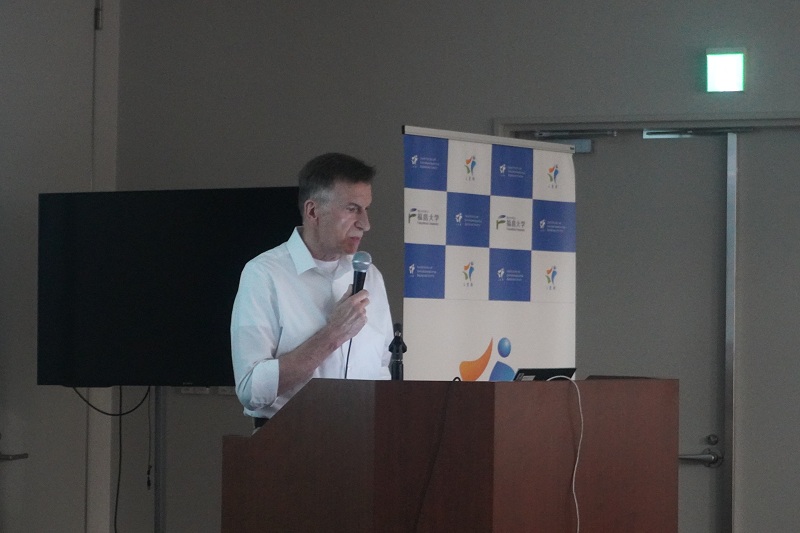
On Monday, July 13, 2026, the IAEA Lecture (IER Special Seminar) was held, featuring Mr. Miroslav PINAK, Mr. Gerhard PROEHL, Mr. Gerard BRUNO, and Mr. Matthias LADEMANN, experts from the International Atomic Energy Agency (IAEA). Thirty-three participants, including researchers and graduate students, attended the lecture, both in person and online. The seminar was held at the IER as one of a series of lectures conducted by IAEA experts at universities and other institutions in Fukushima Prefecture, based on the agreement between the IAEA and the prefectural government.
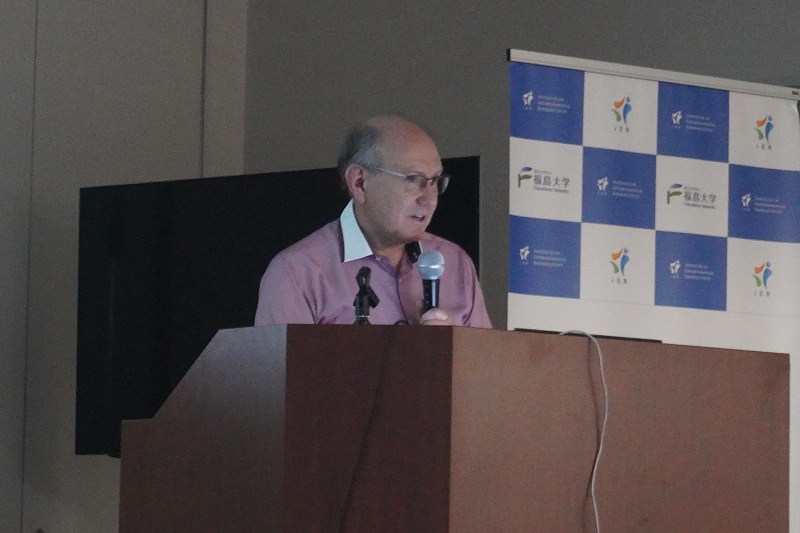
After Director Nanba’s opening remarks, Mr. Pinak introduced the cooperative projects between Fukushima Prefecture and the IAEA that have been carried out since the Fukushima Daiichi Nuclear Power Plant accident. He explained the importance of sharing international knowledge on radiation monitoring, decontamination, waste management, and other related topics, and presented an overall picture of international cooperation supporting regional reconstruction.
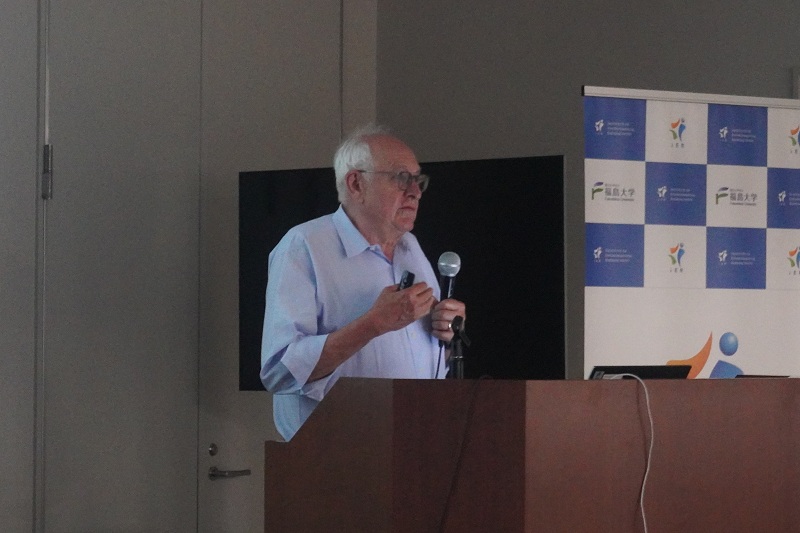
Mr. Proehl discussed the role of environmental monitoring based on the IAEA safety standards and the effectiveness of radiation countermeasures after the accident. Regarding remediation, he noted that while decontamination has proven effective in terrestrial environments, its implementation in aquatic systems is challenging because of the dynamic nature of flowing water. He further emphasized that countermeasures should be selected according to site-specific conditions and environmental characteristics, taking into account monitoring results, natural decay, and a long-term perspective.
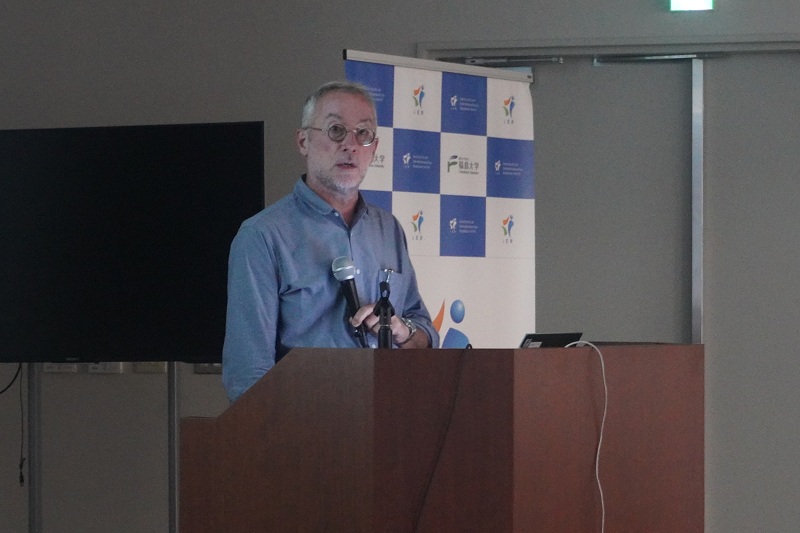
Mr. Bruno explained the basic principles of radioactive waste management and then discussed how to deal with the large amount of decontamination waste generated after the accident. He described the management strategy for each waste category, volume reduction and recycling, and the process from interim storage to final disposal outside Fukushima Prefecture. Through this explanation, he clearly showed the challenges of waste management after the accident.
The final speaker, Mr. Lademann, gave a presentation from a viewpoint of public health, explaining that internal radiation doses from food have been kept extremely low and that no adverse health effects have been confirmed among the general public following the Fukushima accident. However, reputational damage and psychological effects remain important challenges. He concluded by emphasizing that building public trust through accurate information sharing and effective communication is essential.
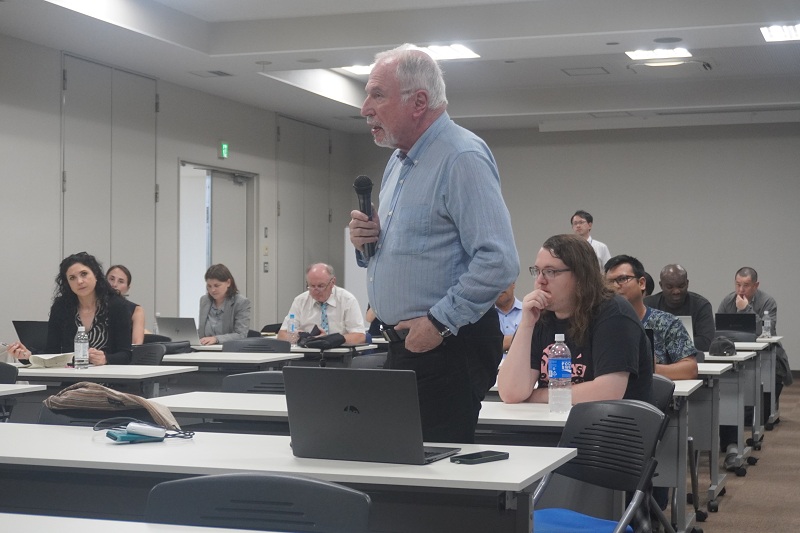
After the lectures, there was an active discussion with researchers from the IER. We are currently making arrangements to hold another IAEA lecture in November of this fiscal year. The next lecture is expected to cover risk communication.