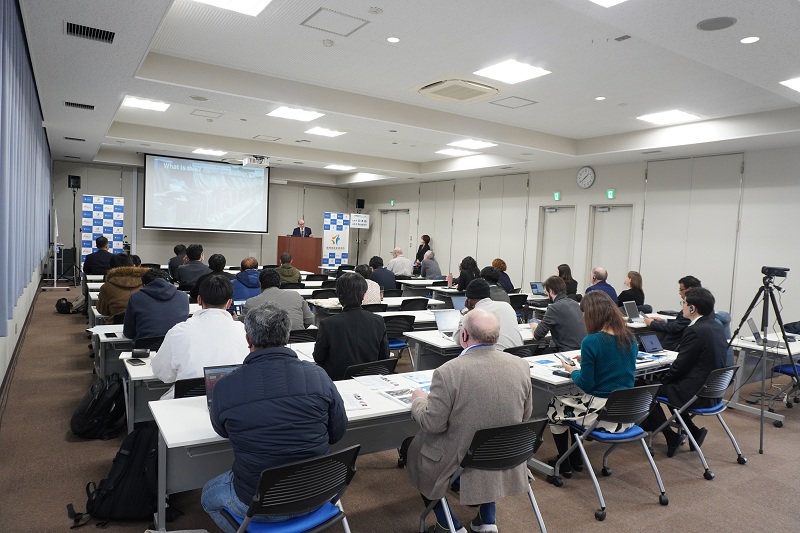
IER Special Seminar (IAEA Lecture) held at IER on December 8, 2025
| Date & Time | Monday, December 8, 2025, 13:30-15:10 JST |
| Venue | 6F Conference Room, IER Main Building / Online (Zoom) English-Japanese simultaneous interpretation provided. (Zoom: Venue audio only) |
| Lecture Program: 1. Background and purpose of the lecture – Mr. Miroslav PINAK, Head of Radiation Safety and Monitoring Section, IAEA 2. “Communicating radiation safety” – Ms. Jo BURGE, Associate Stakeholder Involvement Officer, IAEA – Ms. Sara MOORE, Administrative Associate, IAEA 3. “Management and disposal of spent nuclear fuel: focusing on geological disposal” – Mr. Gerard BRUNO, Head of the Radioactive Waste & Spent Fuel Management Unit, IAEA – Mr. Francois BESNUS, Expert, IAEA 4. Questions and answers | |
| Participants | 37 (Fukushima University faculty, graduate students, undergraduate students, and government officials) |
| Moderator | Ms. Kuwahara (Fukushima Prefectural Centre for Environmental Creation) |
On Monday, December 8, 2025, the IER Special Seminar (IAEA Lecture) was held, featuring Mr. Miroslav PINAK, Ms. Jo BURGE, Ms. Sara MOORE, Mr. Gerard BRUNO, and Mr. Francois BESNUS, experts from the International Atomic Energy Agency (IAEA). Thirty-seven participants, including prefectural government officials, researchers, graduate students, and undergraduate students, attended the lecture, both in person and online. The seminar was held at the IER as one of a series of lectures conducted by IAEA experts at universities and other institutions in Fukushima Prefecture, based on the agreement between the IAEA and the prefectural government.
After opening remarks by Director Nanba of our institute, Mr. Miroslav Pinak of the IAEA explained the background and purpose of the lecture and introduced the lecturers.
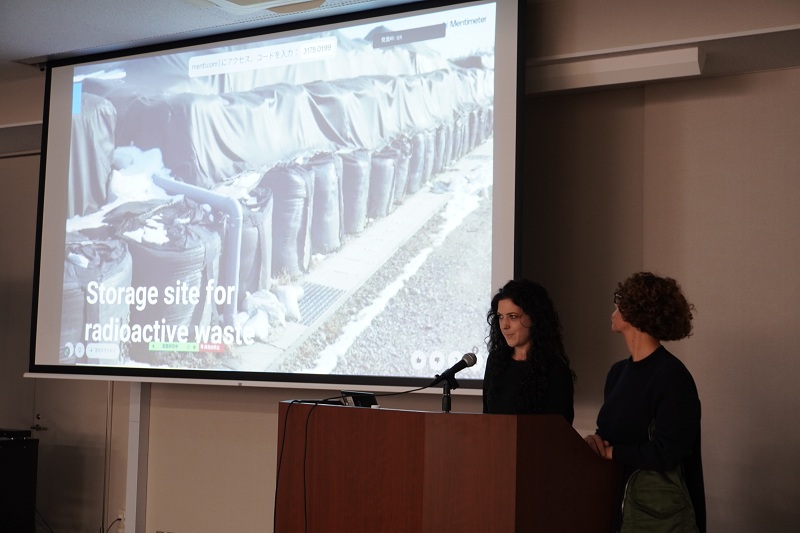
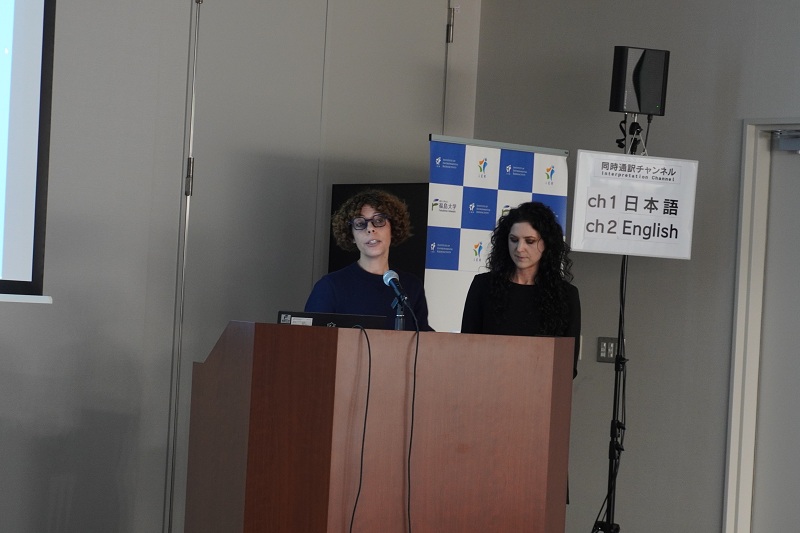
In the first lecture, Ms. Burge and Ms. Moore presented strategies for communicating the safety of radioactive waste effectively to the general public. They demonstrated how ambiguous information about radioactive waste can trigger varied emotional responses—worry, curiosity, or confusion—and emphasized that unclear or delayed information weakens public trust. Key communication challenges include people’s reliance on emotions such as fear of invisible radiation over scientific evidence and experts’ overuse of technical jargon.
They emphasized using plain language and focusing on safety, health and practical impacts on the environment rather than technical details. They introduced the Radiation Safety Navigator, an online tool developed by the IAEA that provides ready-to-use explanations, communication tips, and visual materials like infographics. Through interactive exercises, they showed how to translate complex concepts into easy-to-understand messages, positioning the tool as a resource for experts to practice transparent communication and build public trust.
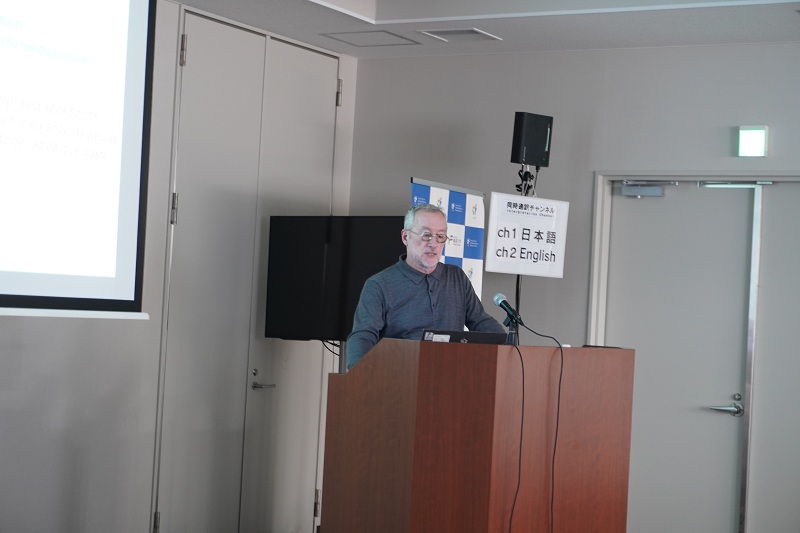
Next, Mr. Bruno and Mr. Besnus’s lecture defined radioactive waste as radioactive material of no further use. The IAEA classifies it into six categories, from exempt waste to high-level waste, each requiring a specific disposal method. The core safety functions of disposal are isolation from the biosphere and containment of hazardous substances. Disposal facilities range from simple surface facilities for low-level waste to deep geological repositories for high-level waste with high radioactivity and long half-lives. A key safety principle is the multi-barrier concept, where the failure of one barrier is compensated for by others. Mr. Bruno stated that demonstrating long-term safety would require detailed modeling of normal and accidental scenarios over hundreds of thousands of years, taking into account various characteristics of the facilities.
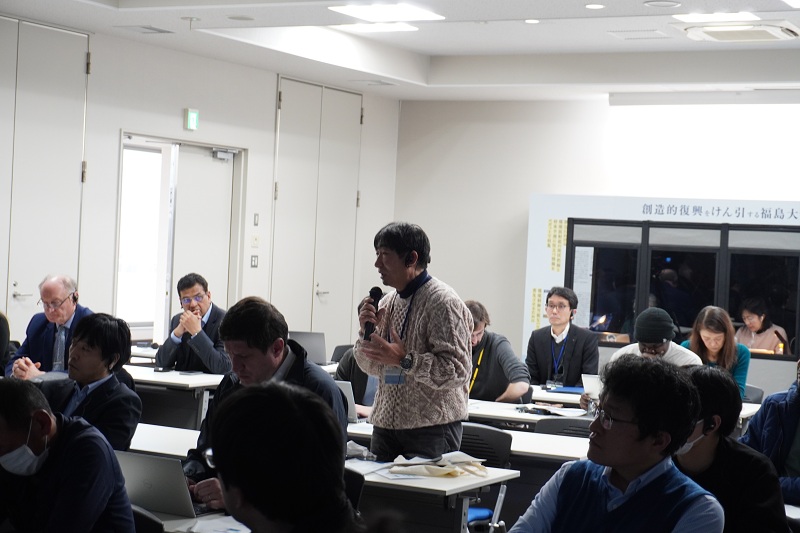
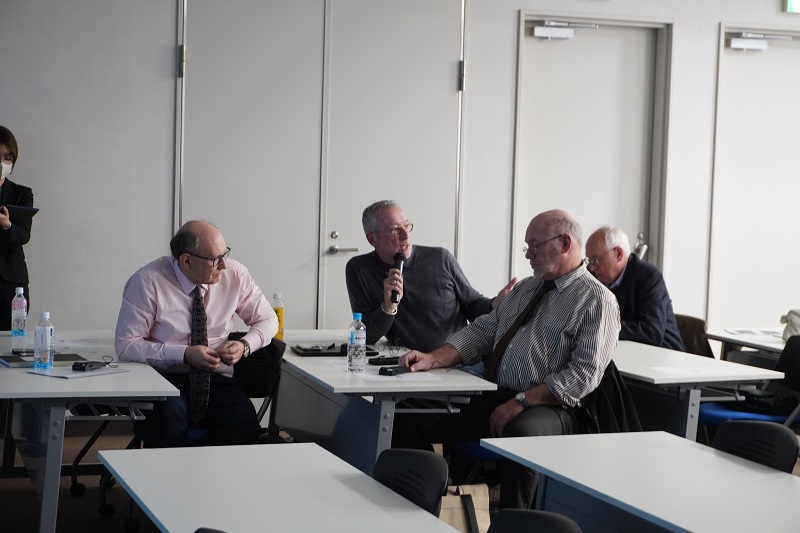
After the lectures, lively questions were raised by researchers and students. For example, topics discussed included whether there are tools to support communication with the general public other than those related to radioactive waste, and the IAEA’s stance on situations where countries cannot store radioactive waste domestically, given the global scarcity of suitable disposal sites.