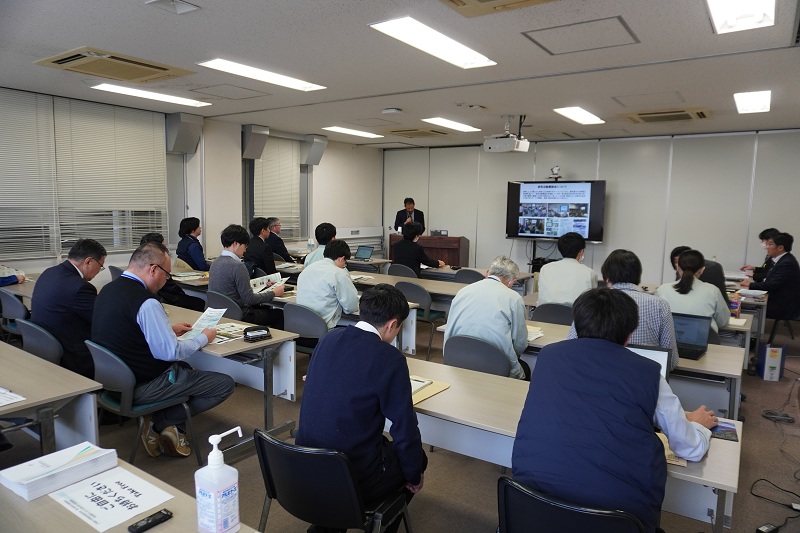
The 23rd Dialogue Meeting held at the Fukushima Office of River and National Highway (Fukushima City) on December 15, 2025
| Date & Time | Monday, December 15, 2025, 13:30-15:30 |
| Venue | Conference Room at the Fukushima Office of River and National Highway (Fukushima City) |
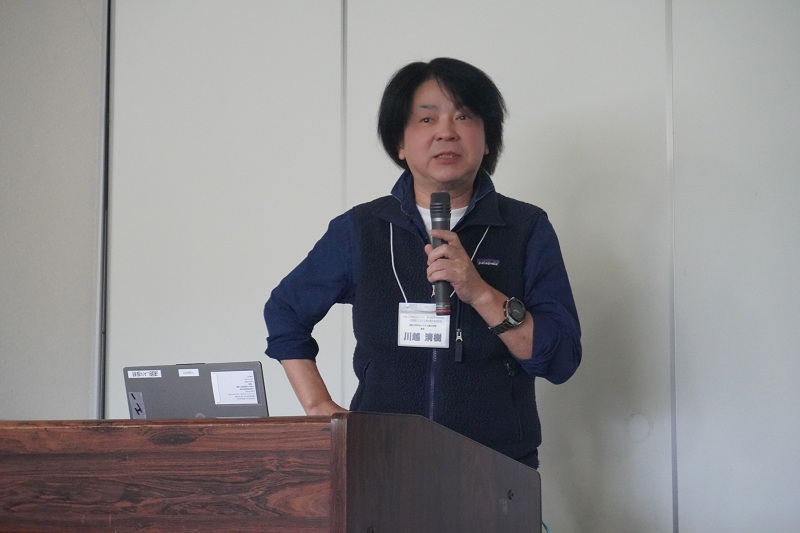
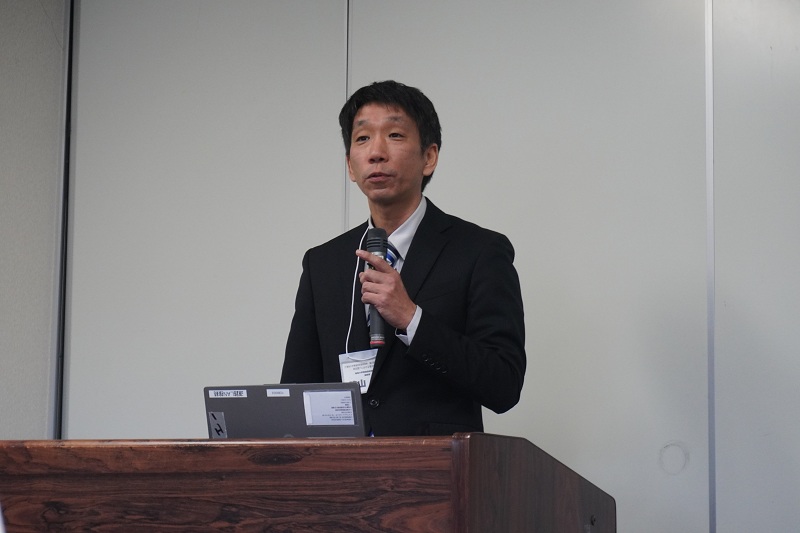
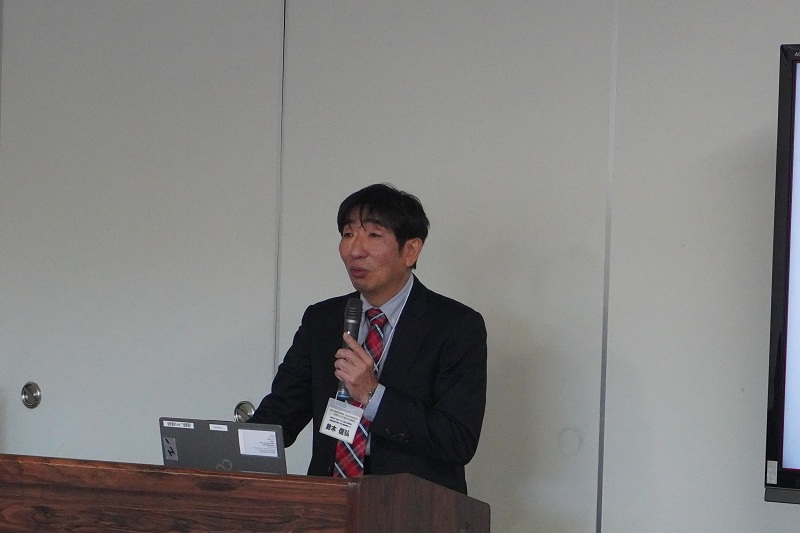
| Lecture Titles | Risk assessment of sediment and driftwood discharge considering the influence of forest zones (Professor KAWAGOE Seiki, Faculty of Symbiotic Systems Science / Adjunctive Researcher of the IER) 137Cs discharge and transfer to coastal waters (Associate Professor WAKIYAMA Yoshifumi, IER) Characteristics of suspended particles in Abukuma River: insights from multi-parameter analysis (SUZUKI Nobuhiro, 3rd-year doctoral student, major in Environmental Radioactivity) |
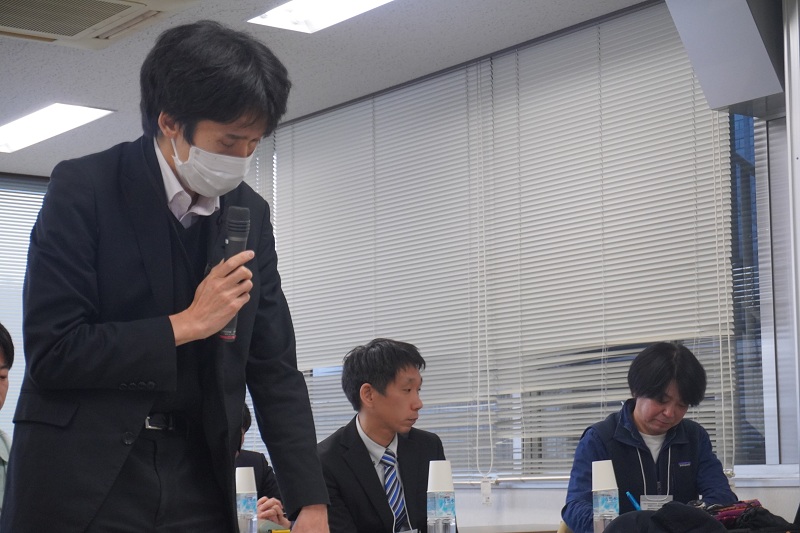
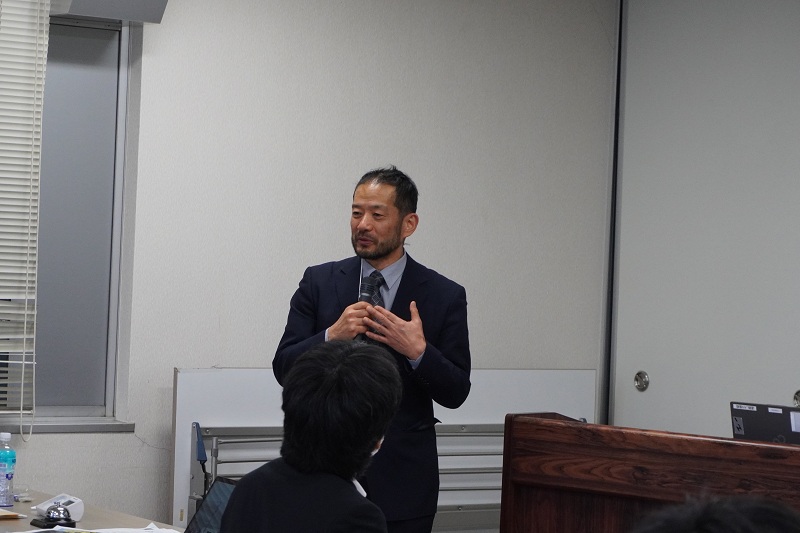
Since 2016, the Institute of Environmental Radioactivity (IER) has been holding dialogue meetings several times a year to feedback our research results to local communities. The 23rd meeting was held at the Fukushima Office of River and National Highway (Fukushima City) under the theme “Material Dynamics in the Abukuma River during High Water Events.” A total of 29 people participated, including online attendees.
After opening remarks by Director Nanba, Associate Professor Wakiyama outlined the purpose of the meeting. He explained that this session would feature a presentation by a graduate student as part of his Science Communication class, accompanied by reports on related research from faculty members.
Professor Kawagoe presented his research focusing on Ecosystem-based Disaster Risk Reduction (Eco-DRR) in response to the intensification of sediment-related disasters associated with climate change. Emphasizing the importance of balancing both adaptation and mitigation measures, he introduced practical case studies such as evaluating suitable sites for planting Paulownia trees in Mishima Town and verifying the sediment buffering effects of forests using UAVs. He is currently conducting extensive research in the Arakawa and Matsukawa Rivers and other areas.
Associate Professor Wakiyama explained the dynamics of 137Cs deposited on land following the Fukushima Daiichi Nuclear Power Plant accident, specifically focusing on its movement in rivers and transfer to coastal waters. During high-flow events, 137Cs is primarily discharged in suspended form, exhibiting different behavior compared to low-flow conditions. In the long term, the amount of 137Cs discharged through rivers has been decreasing due to declining 137Cs concentrations. However, temporary spikes in seawater 137Cs concentrations have been observed in coastal areas after major high-flow events. Elucidating the mechanisms and conditions behind this phenomenon remains a subject for future research.
Mr. Suzuki, a graduate student, investigated the dynamics of suspended sediment in the Abukuma River during high-flow events, using carbon and nitrogen stable isotope ratios and heavy metals. The results revealed that while sediment supply from forests increased during these events, 137Cs concentrations decreased. He reported that this trend is a distinctive feature of the Abukuma River, in contrast to rivers in the Hamadori region, where inflows from forests lead to higher 137Cs concentrations, suggesting differences in 137Cs dynamics.
During the discussion following the presentations, we received many questions and comments from the participants, as well as various feedback through the post-event survey. We intend to make use of these valuable opinions in our future research at IER.