The 4th IER Seminar of FY2026 held on October 5, 2026 (Graduate Students)
| Date & Time | Monday, October 5, 2026, 13:30-15:00 JST |
| Venue | 6F Conference Room, IER Main Building / Online (Zoom) |
| Speakers | OKUYAMA Taiga (2nd-year master’s student, major in Environmental Radioactivity) SUN Shuhan (2nd-year master’s student, major in Environmental Radioactivity) MIURA Shinya (2nd-year master’s student, major in Environmental Radioactivity) (Presentation order) |
| Lecture Titles | Estimation of radiocaesium amounts in the North Pacific and the sea area around Fukushima before and after the Fukushima Daiichi Nuclear Power Plant accident (Okuyama) Root-uptake transfer and internal distribution of radiocesium in Japanese red pine in Fukushima (Sun) Effects of body size, season, and site on 137Cs concentrations in two species of salmonids (Miura) |
| Participants | 24 |
Institute of Environmental Radioactivity (IER) regularly holds the IER Seminar in which the faculty members report on their research results, with the aim of facilitating their research activities and promoting communication.
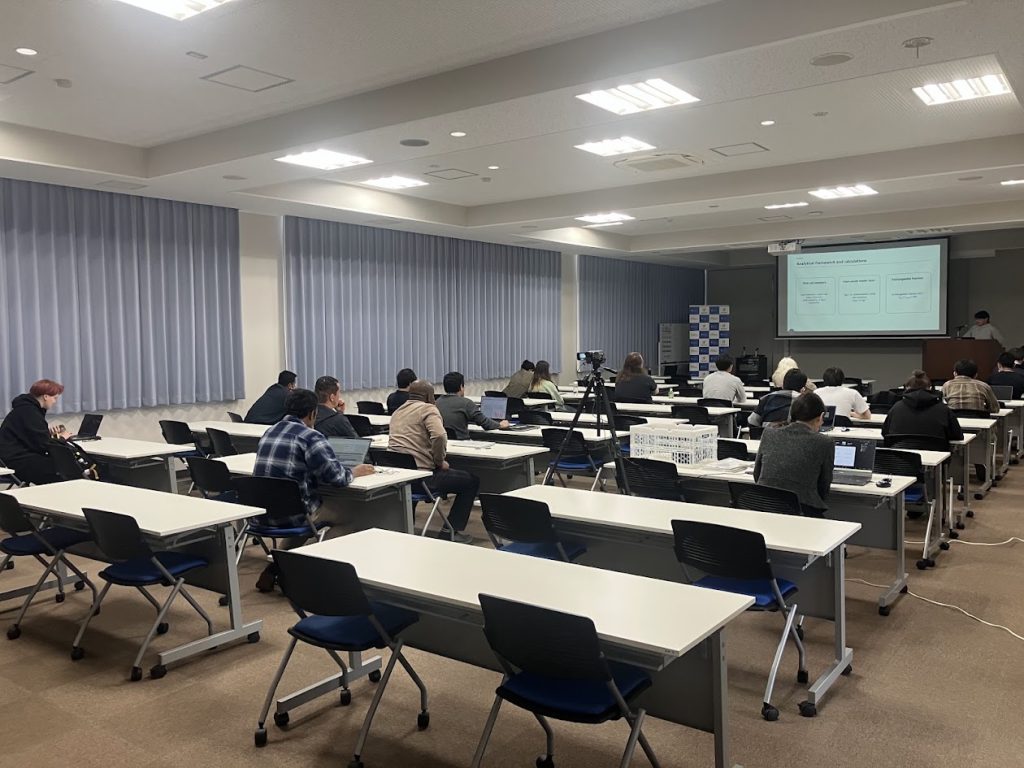
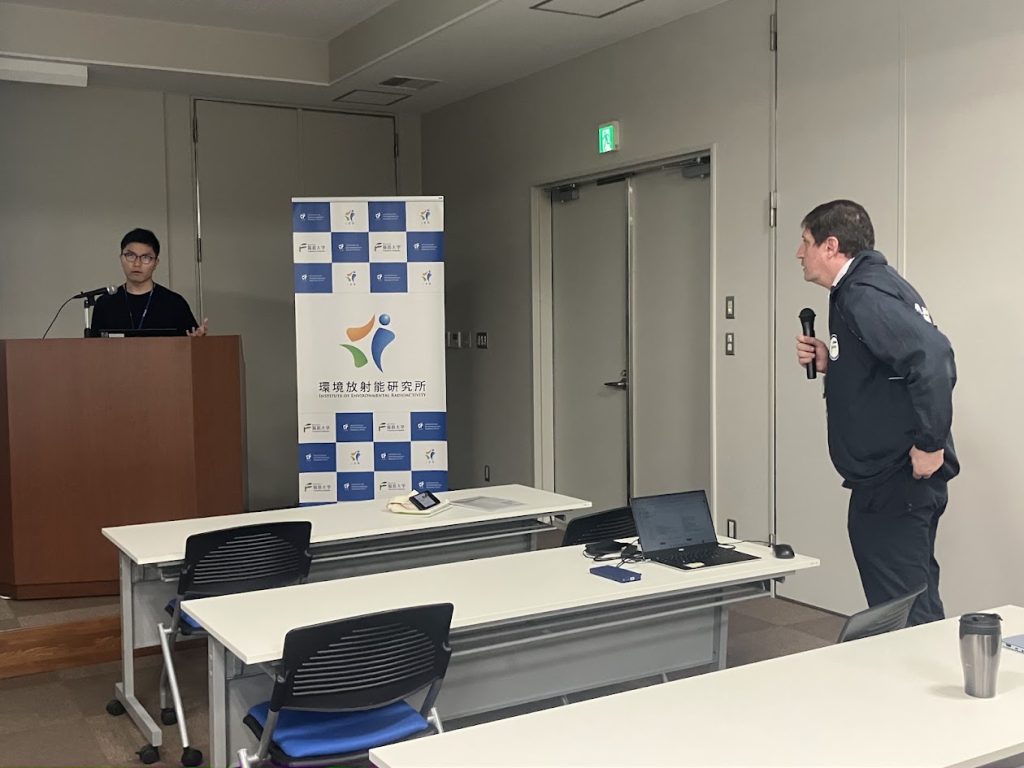
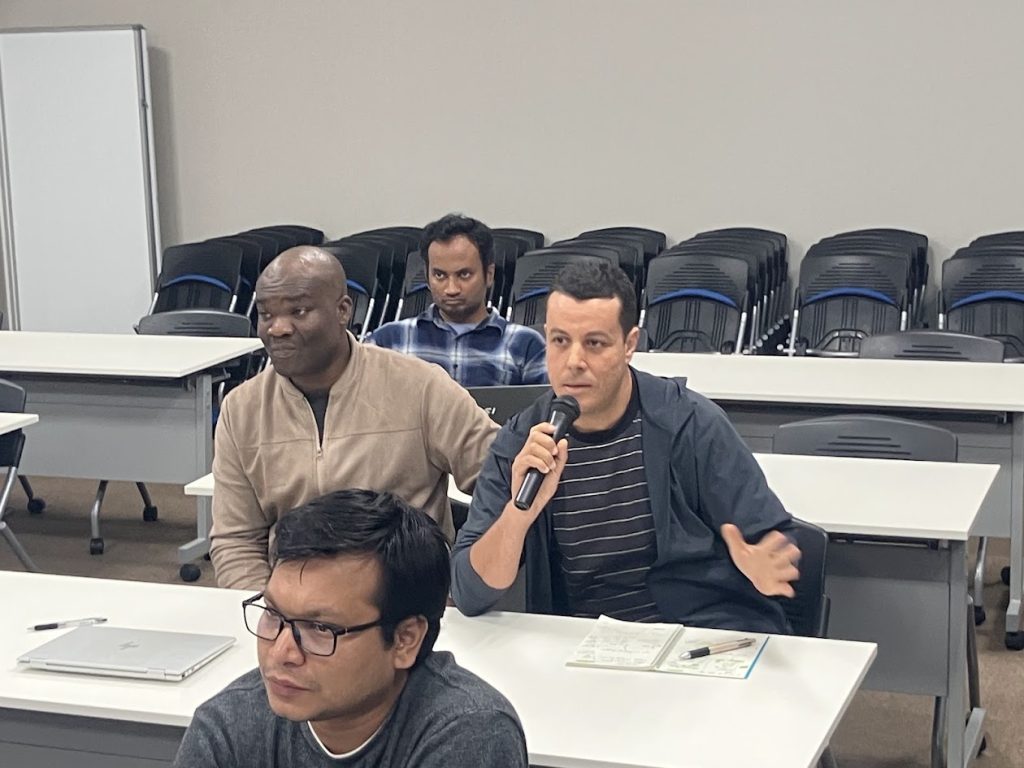
In the 4th IER Seminar of this fiscal year that was held on October 5, 2026, three presentations were given by three master’s students majoring in Environmental Radioactivity to 24 participating researchers and students as follows.
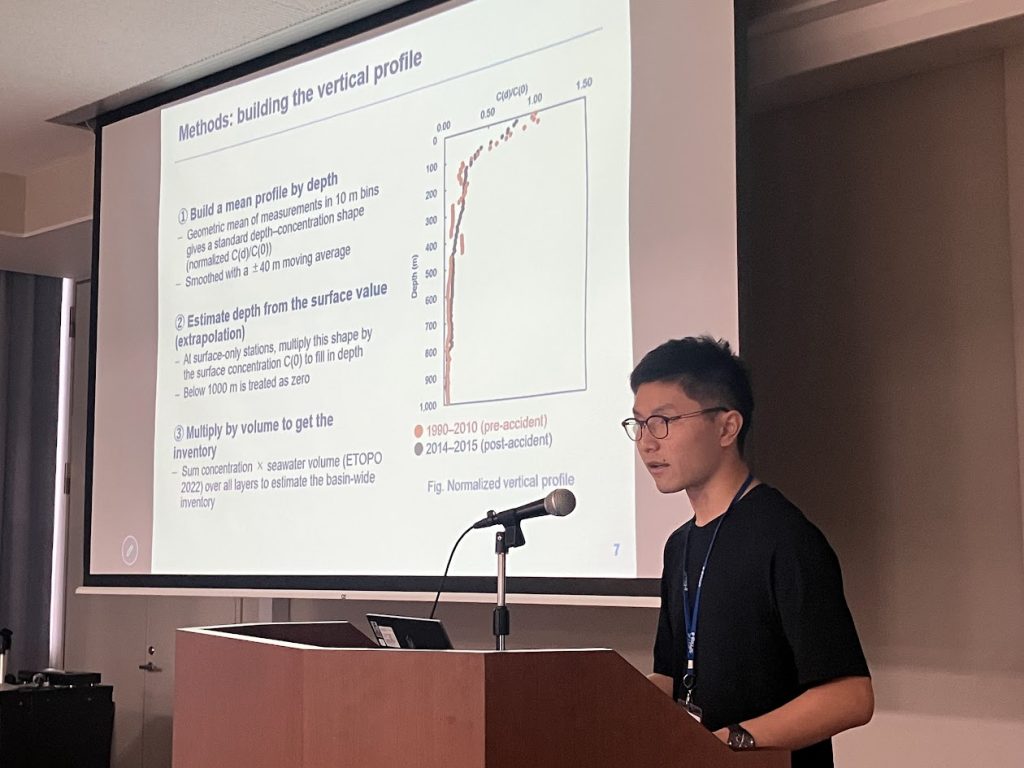
Mr. Okuyama from the Takata Laboratory presented on changes in the amount of radiocesium in the North Pacific before and after the Fukushima Daiichi Nuclear Power Plant (FDNPP) accident, as well as temporal variations in radiocesium level in the coastal waters near the FDNPP.
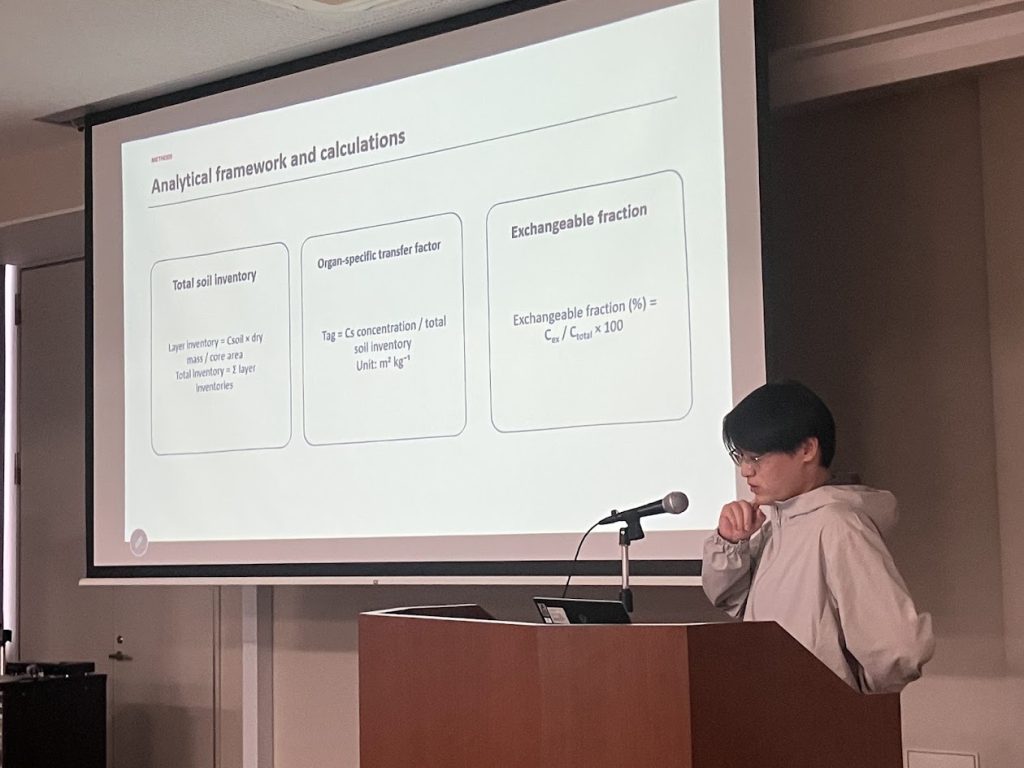
Mr. Sun from the Yoschenko Laboratory presented on 137Cs distribution in soil and its transfer to Japanese red pine trees in Fukushima. The study examined three trees and nine soil cores, revealing considerable variations depending on depth and sampling location. Young needles showed the highest concentrations, while the wood showed low concentrations. Tree 2 had high soil inventories and tissue concentrations but low aggregated transfer factors (Tag), indicating lower apparent transfer per unit soil inventory. Exchangeable radiocesium alone could not explain differences in tree transfer. Future work will examine exchangeable potassium and soil properties, while considering root distribution and spatial mismatch.
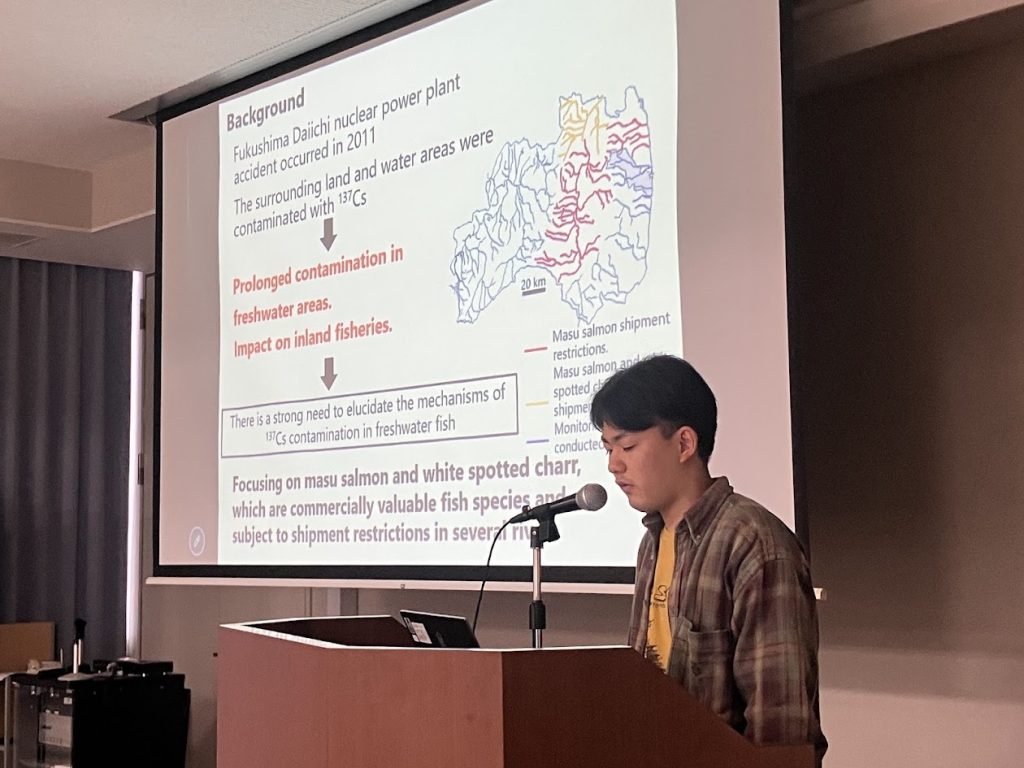
Mr. Miura from the Wada Laboratory presented on the effects of species, season, sampling site, and body size on 137Cs concentrations in masu salmon and white-spotted charr from the Ota River in Fukushima Prefecture. A linear model showed that 137Cs concentrations increased with body size in both species. Concentrations were generally higher in salmon than in charr and higher upstream than downstream. Seasonal patterns differed between species, with salmon showing the highest concentrations in autumn and charr in winter. Stomach content analysis revealed seasonal differences in feeding habits, suggesting that prey resource use, interspecific competition, and physiological traits may contribute to the observed patterns.
After each presentation, various questions and comments were raised by participants.